Parupeneus barberinus (Lacepède, 1801)

Description
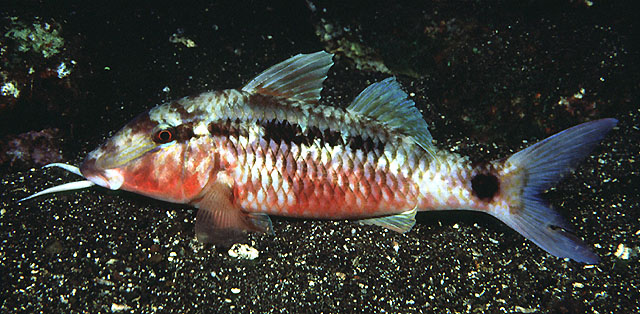
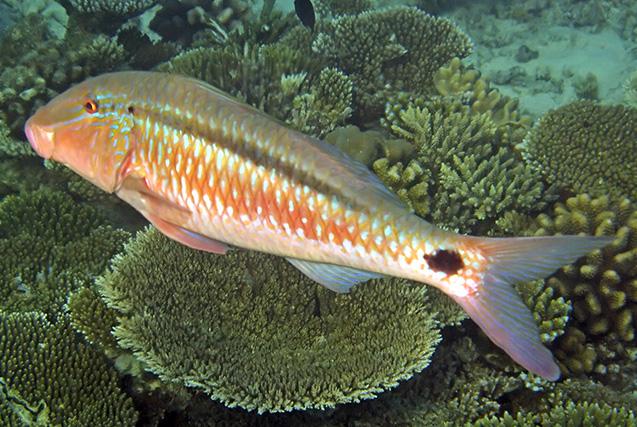
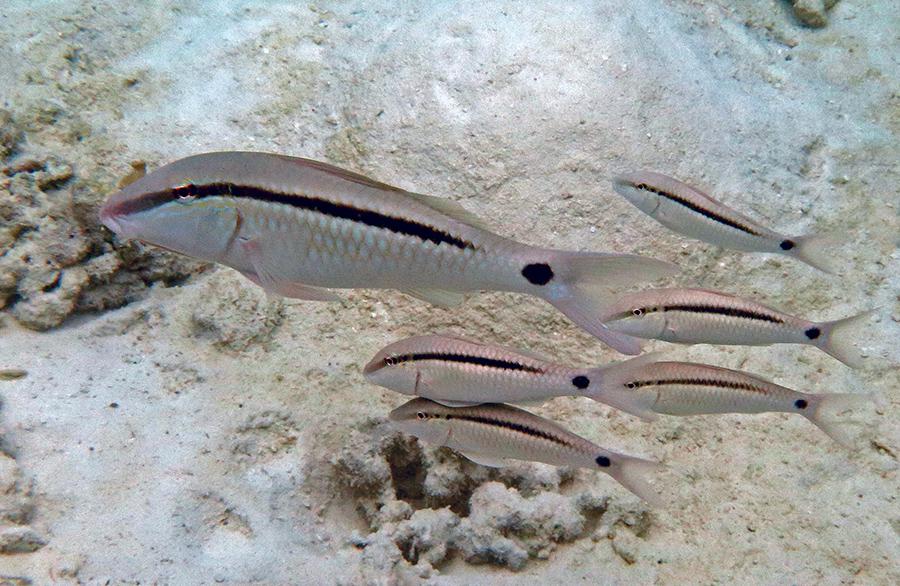
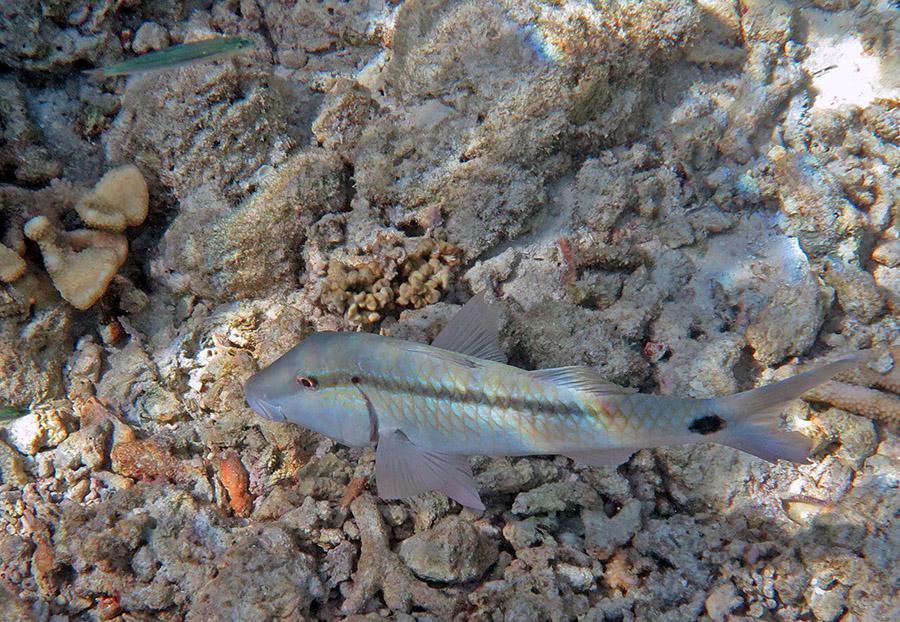
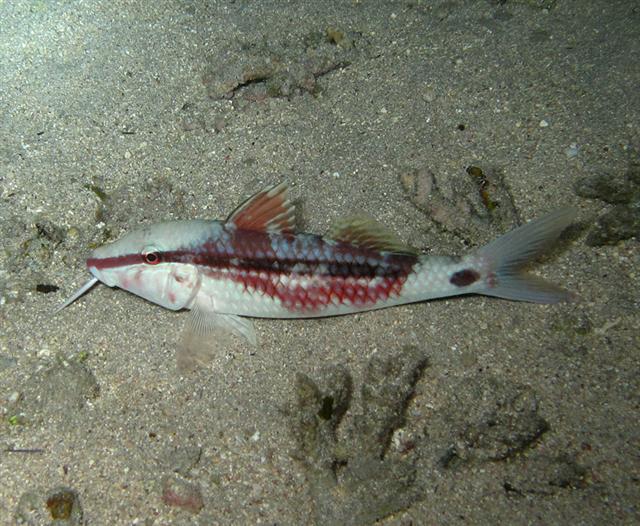
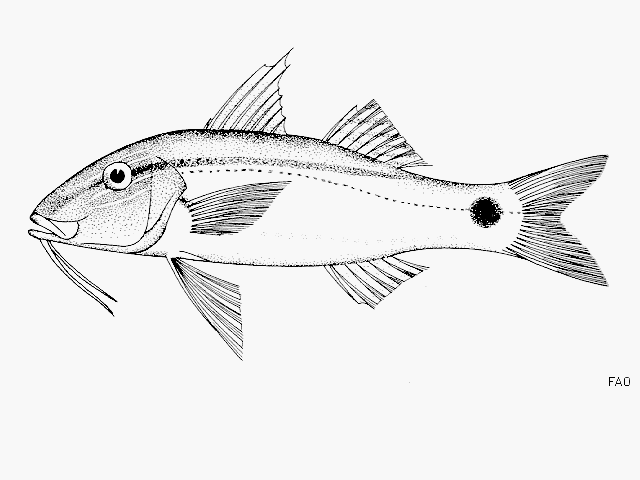
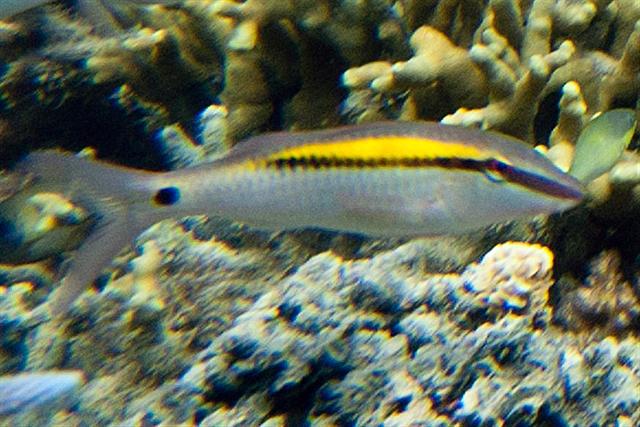
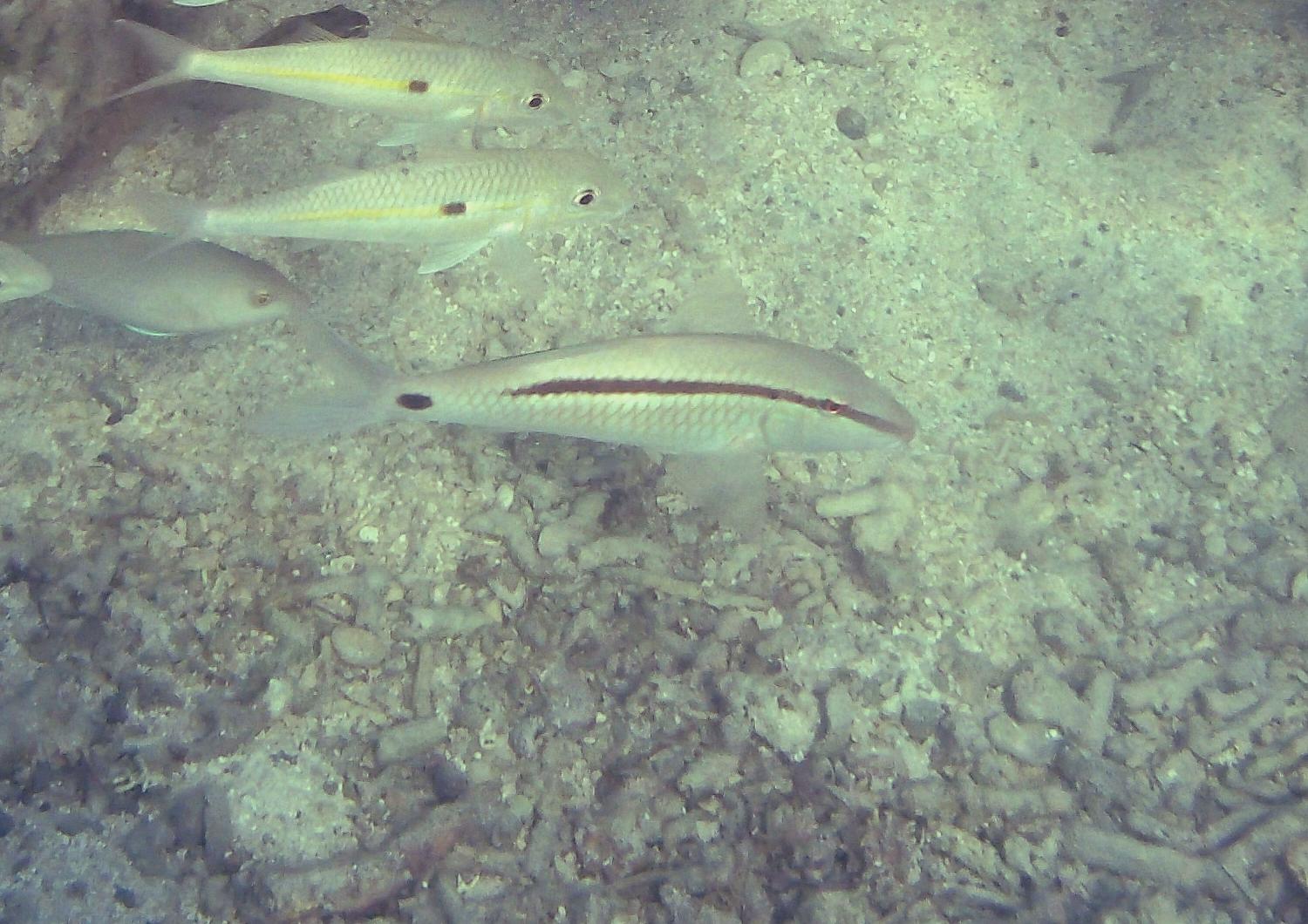
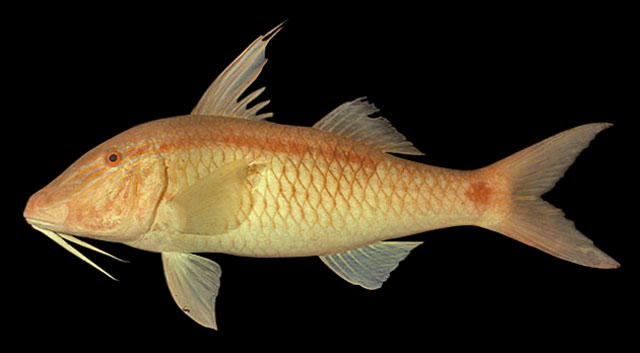
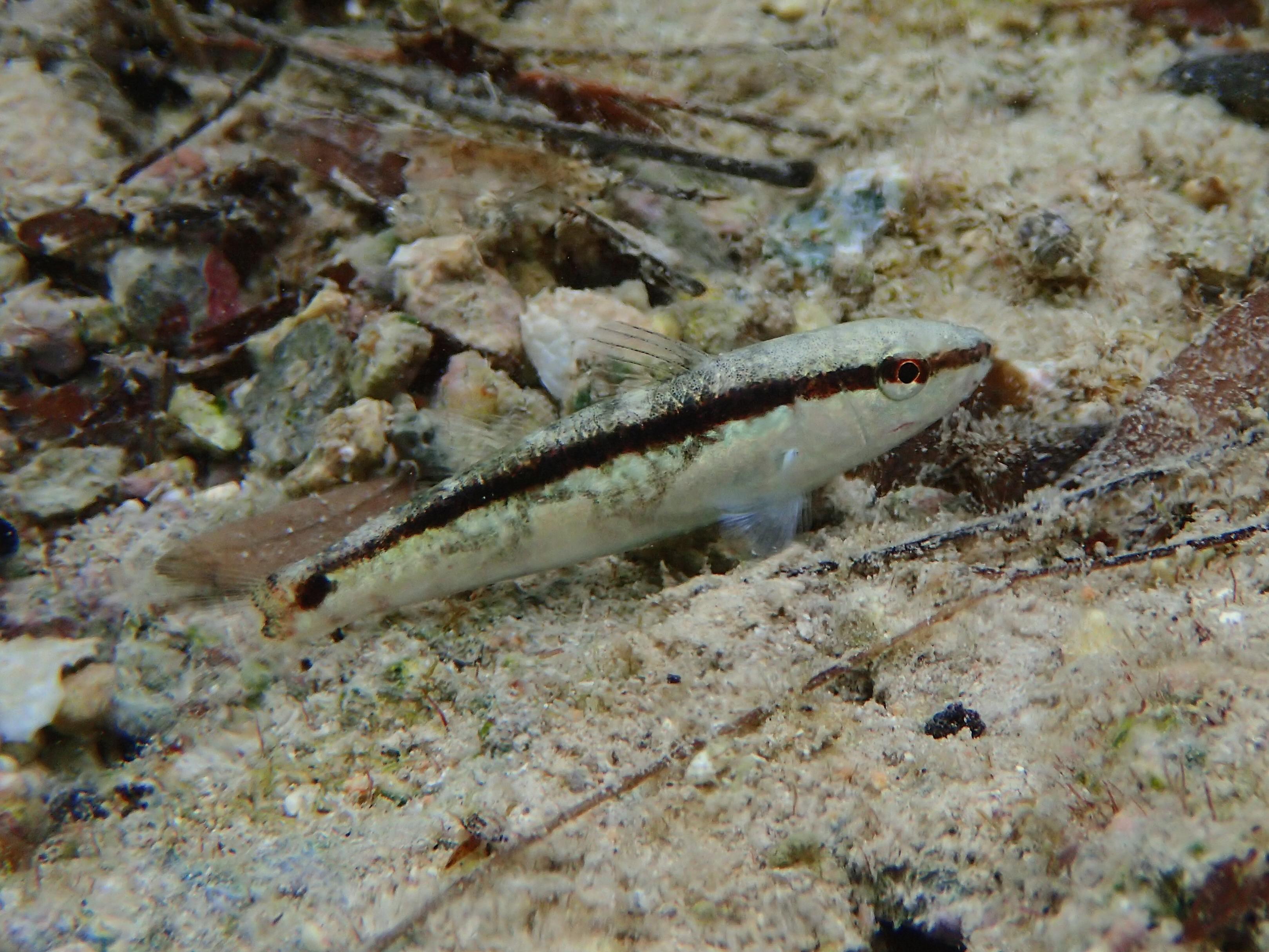
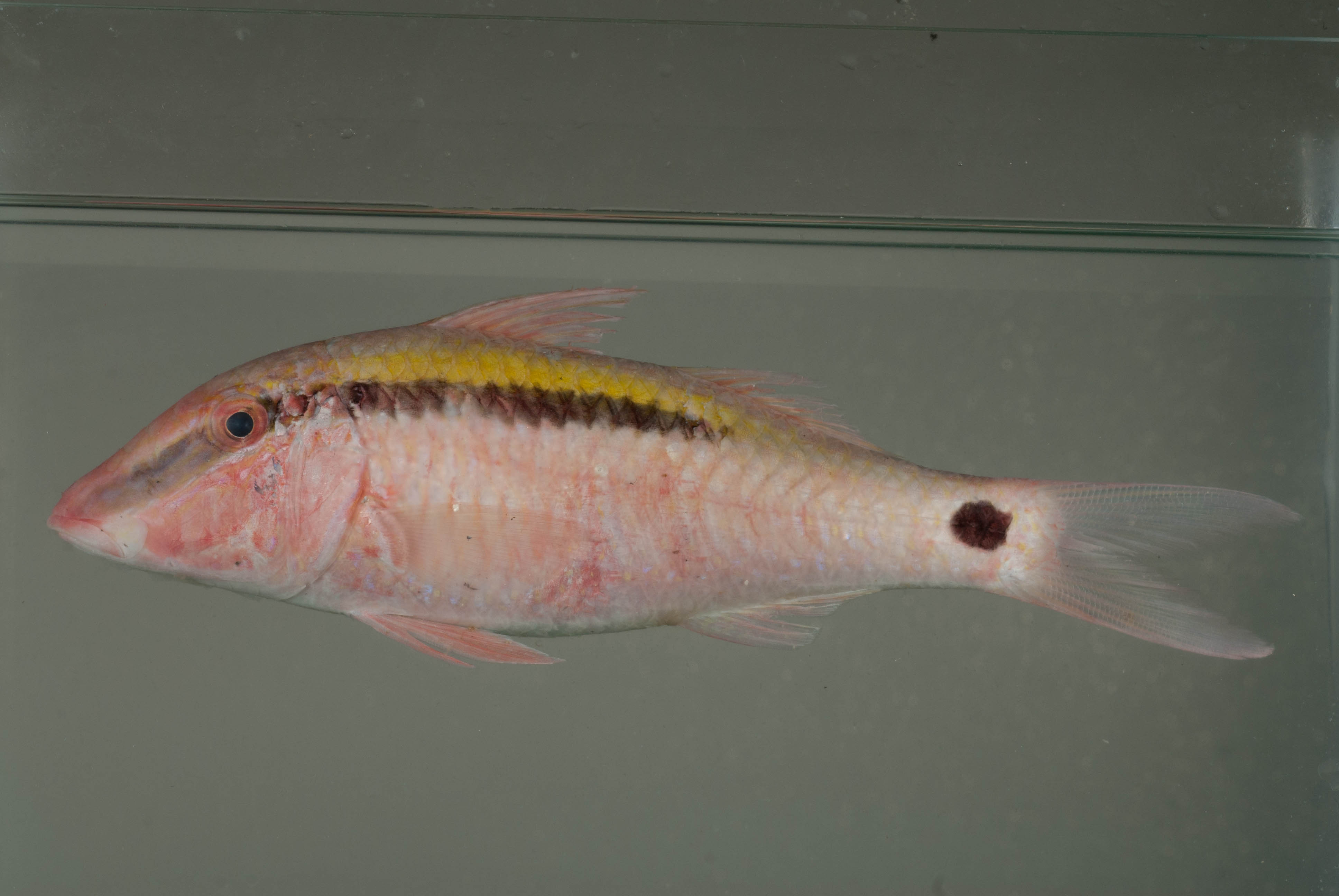
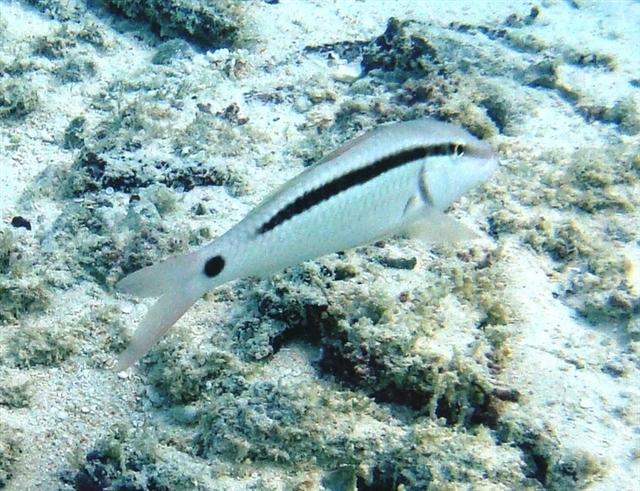
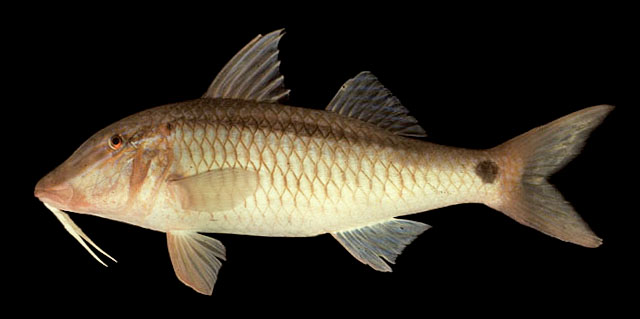
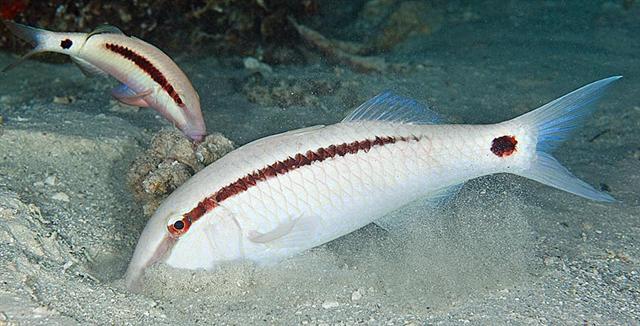
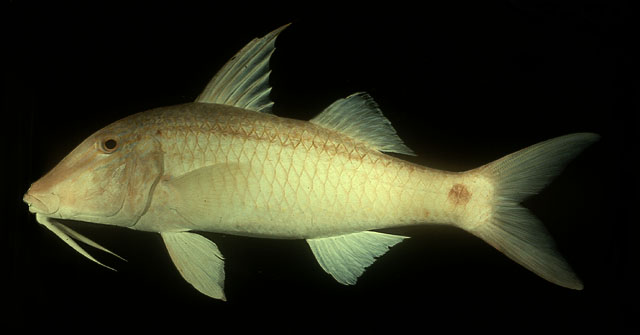
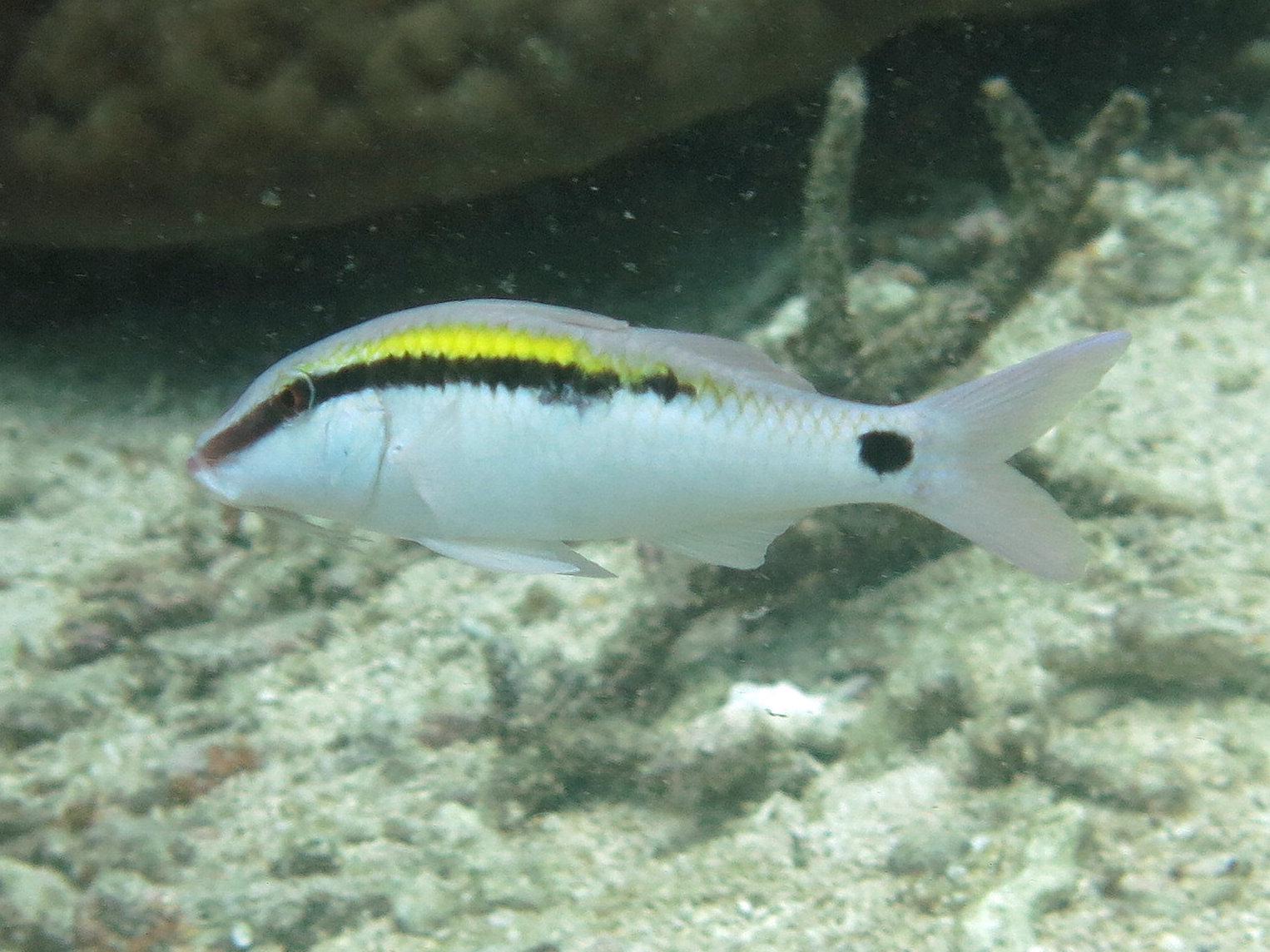
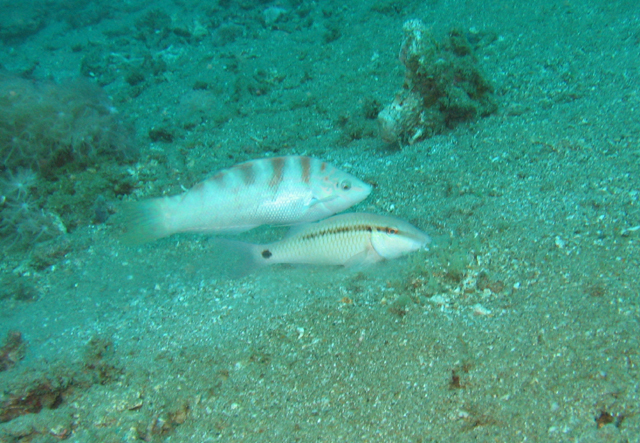
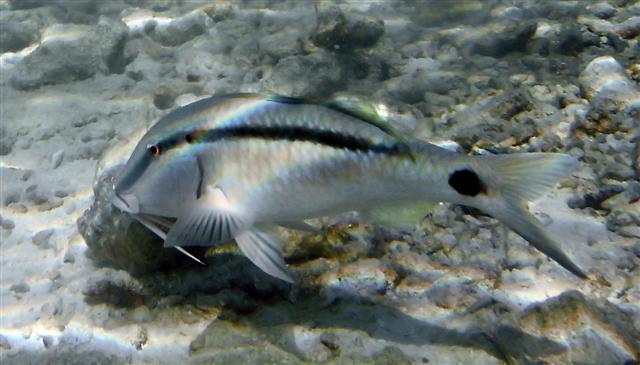
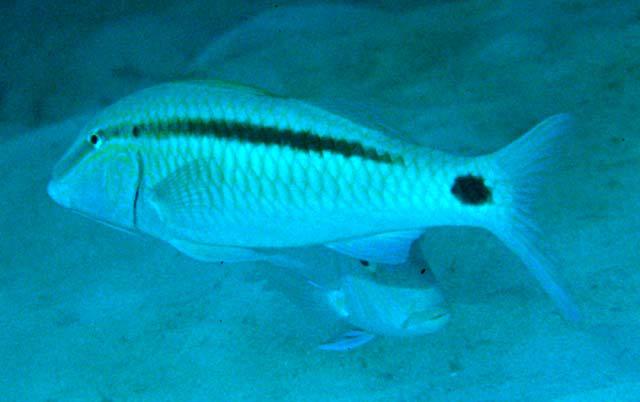
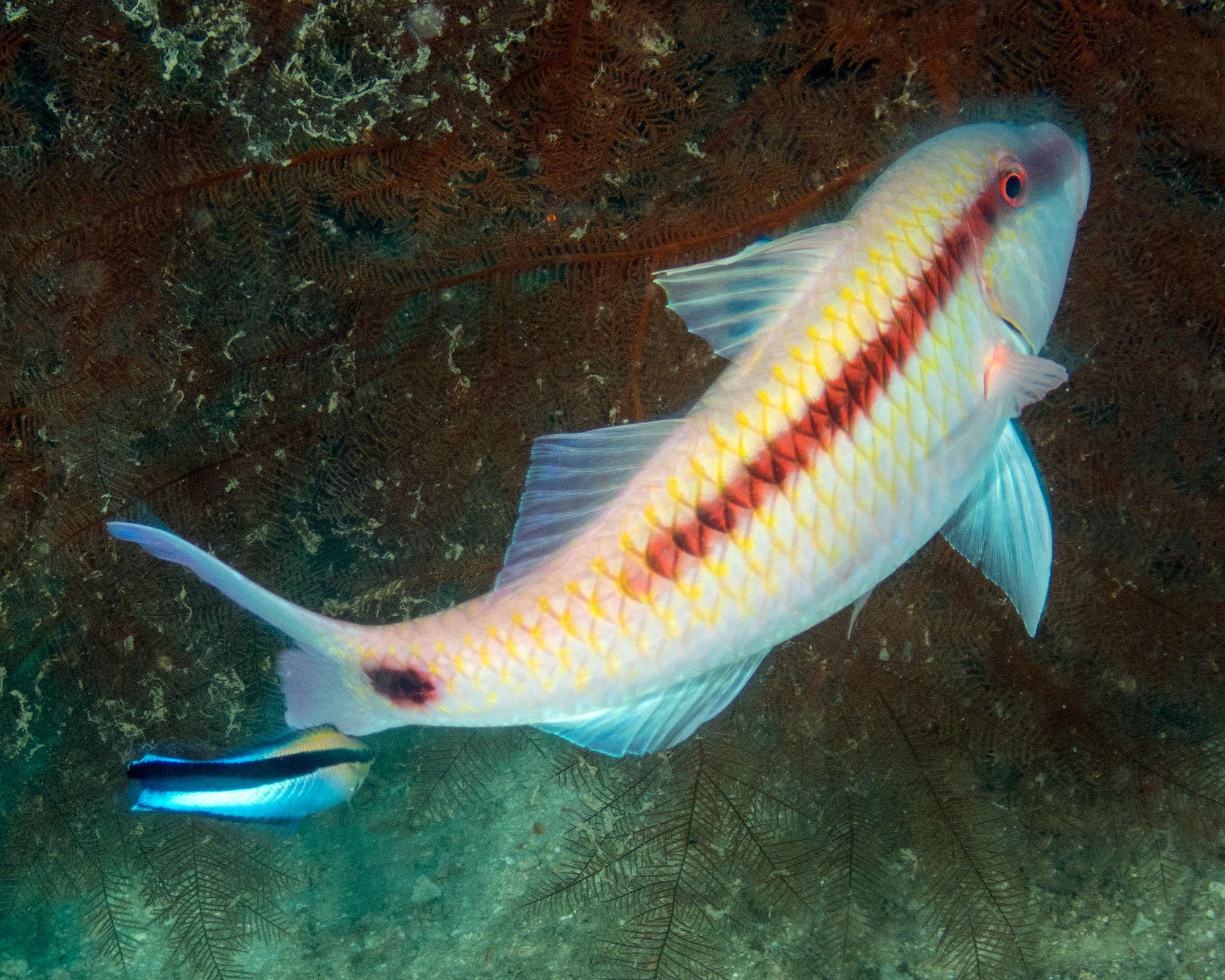
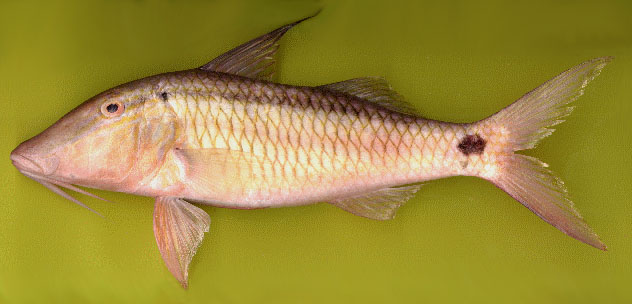
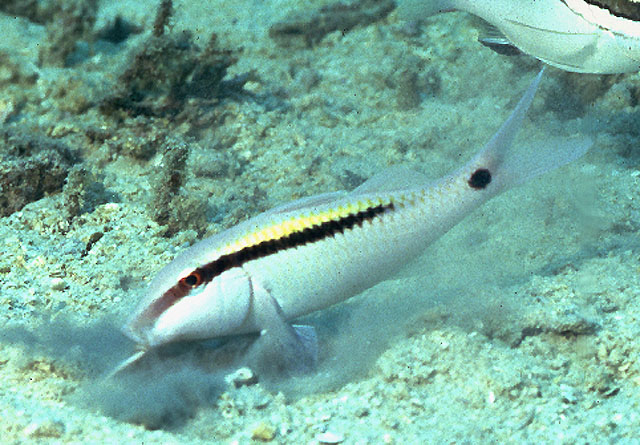
Dorsal spines (total): 8; Dorsal soft rays (total): 9; Anal spines: 1; Anal soft rays: 7. This species is distinguished by the following characters: pectoral rays 16-18 (usually 17); gill rakers 6-7 + 20-25 = 26-31; body moderately elongate, depth 3.3-3.7 in SL; head length (HL) 2.6-3.0 in SL; snout length 1.45-2.1 in HL (relatively longer with growth); barbel length 1.4-1.6 in HL; longest dorsal spine 1.15-1.75 in HL (longer with growth); penultimate dorsal soft ray about equal to last ray in young, 1.2 in last ray in large adults; pectoral fins 1.5-1.75 in HL; pelvic fins 1.35-1.6 in HL. Colour of body whitish with a dark brown to black stripe (red on fish in deeper water) from upper lip through eye to below posterior part of second dorsal fin or anteriorly on upper caudal peduncle; body above stripe yellow or yellowish gray; body below whitish, scale edges narrowly gray to brownish red; a black or red spot larger than eye at the midbase of caudal fin; some large adults with centers of scales below dark stripe pale blue, the edges yellow or with yellow spots, especially posteriorly; peritoneum dark brown (Ref. 54393).
Common Names
Taxonomic Hierarchy
Kingdom: Animalia
Phylum: Chordata
Class: Teleostei
Order: Mulliformes
Family: Mullidae
Genus: Parupeneus
Species: Parupeneus barberinus (Lacepède, 1801)
Climate Zone
Biology
One of the most abundant species of Parupeneus (Ref. 37816). Adults, solitary or in small groups inhabit large sand patches as well as sand and rubble areas of reef flats, and lagoon and seaward reefs to a depth of about 100 m. Juveniles usually in small groups, often mixed with other species in sparse seagrass habitats (Ref. 48636). Adults forage on sand-dwelling invertebrates like polychaete worms and crustaceans. Feeding is diurnal; from 19 adult specimens for food-habit study, the prey in order by volume in the stomachs: crabs (portunid, anomuran, xanthid, and raninid), worms (mainly polychaetes but also sipunculids and unidentified), small bivalve molluscs, brachiopods, shrimps, small gastropods, isopods, amphipods, foraminifera, and a small unidentified eel (Ref. 54393). Individuals from Palau and eastern Carolines often have a yellow band immediately above the broad black band extending behind the eye (Ref. 37816). Minimum depth reported taken from Ref. 128797.
Habitat
associated
Conservation Status
Least Concern
Threat to Humans
Harmless
Parupeneus barberinus (Lacepède, 1801)