Parupeneus barberinoides (Bleeker, 1852)

Description
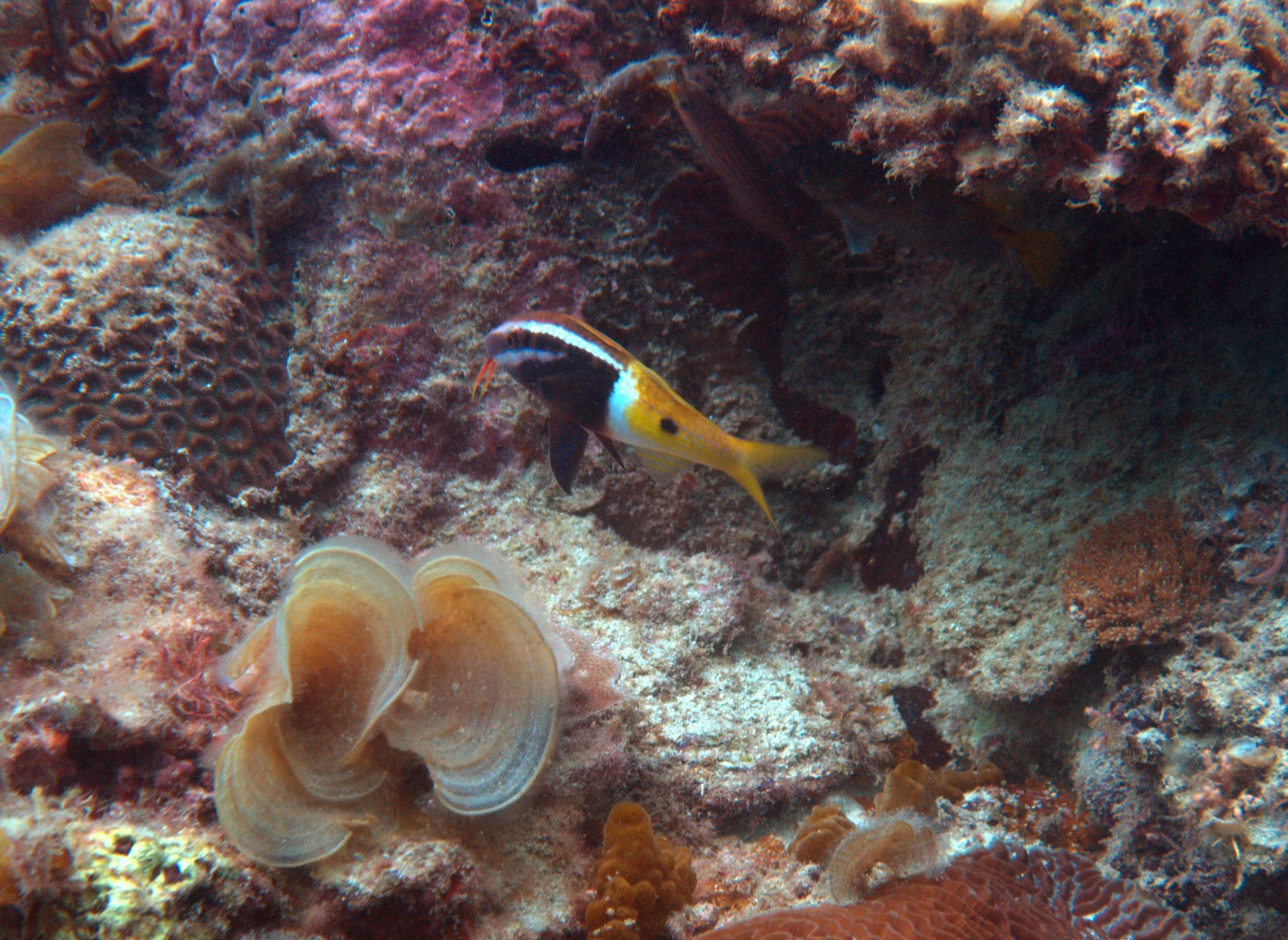
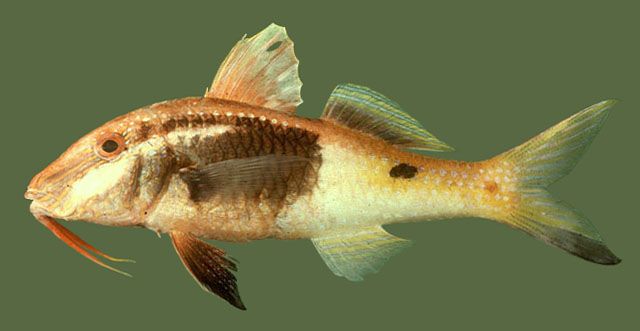
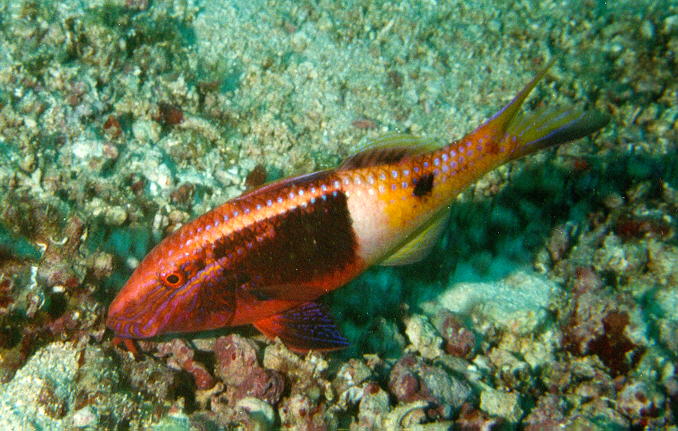
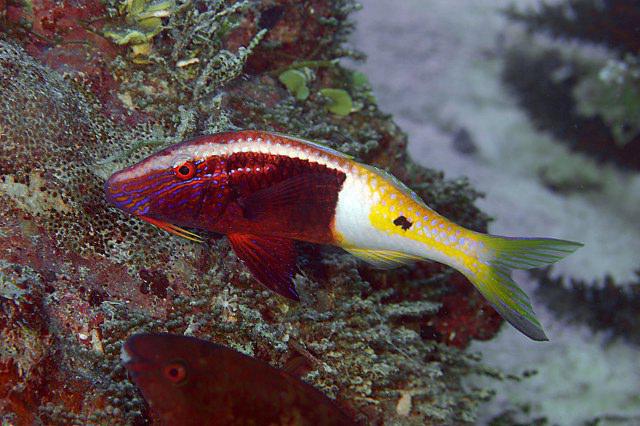
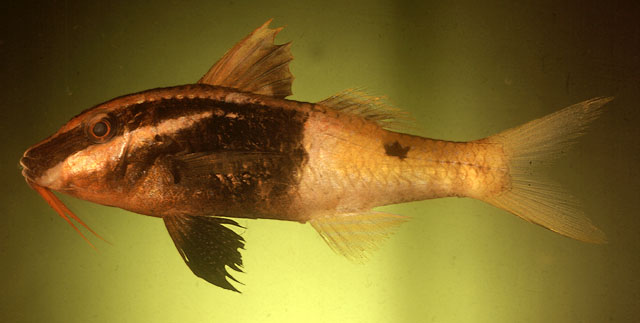
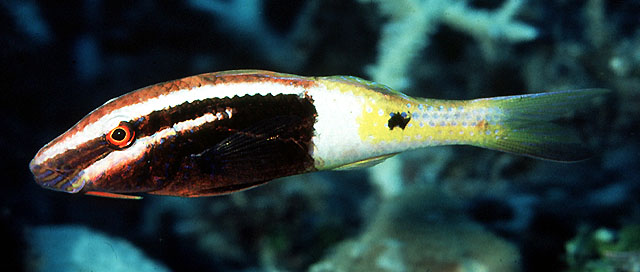
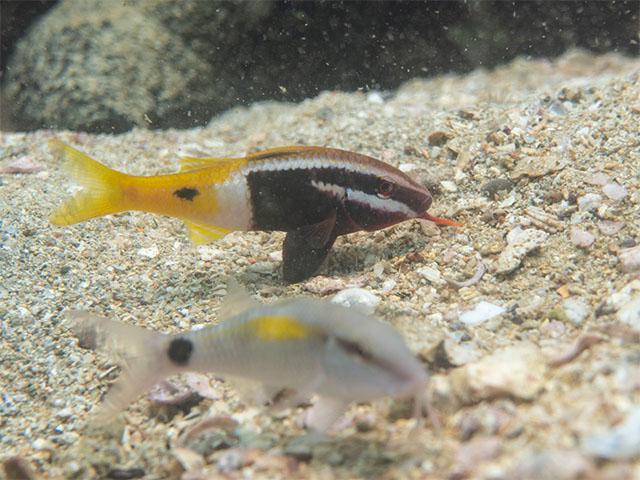
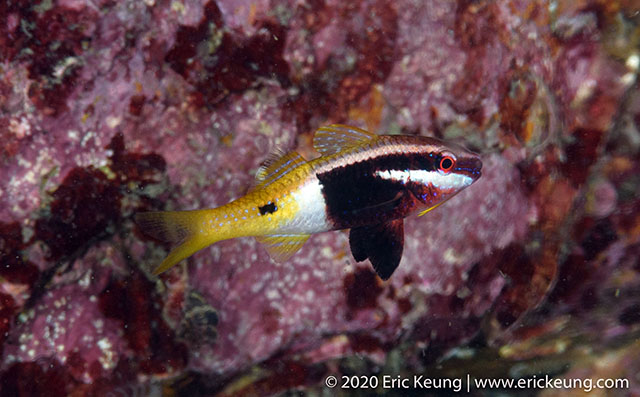
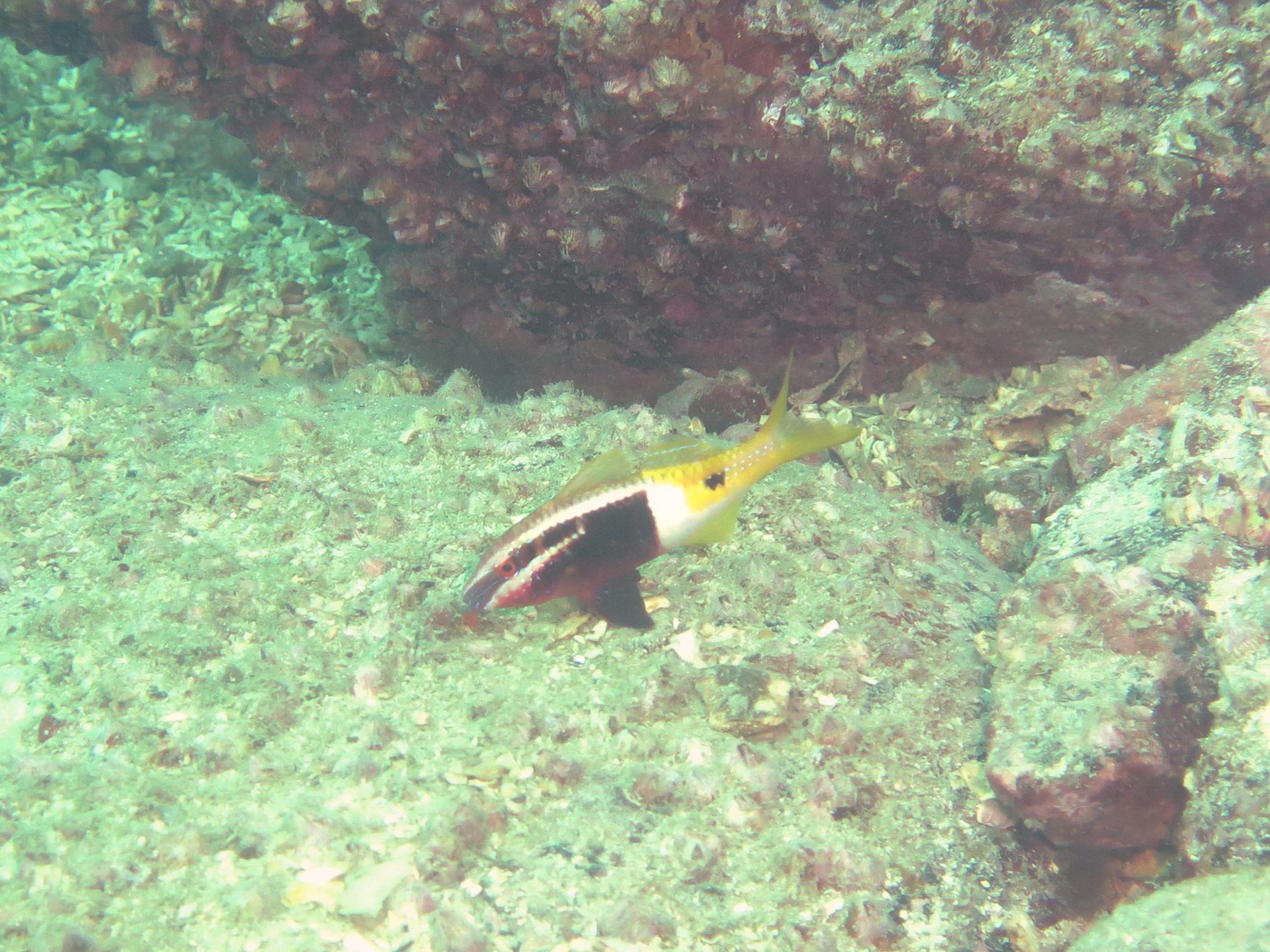
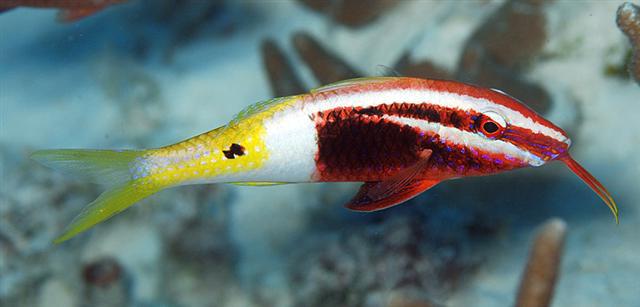
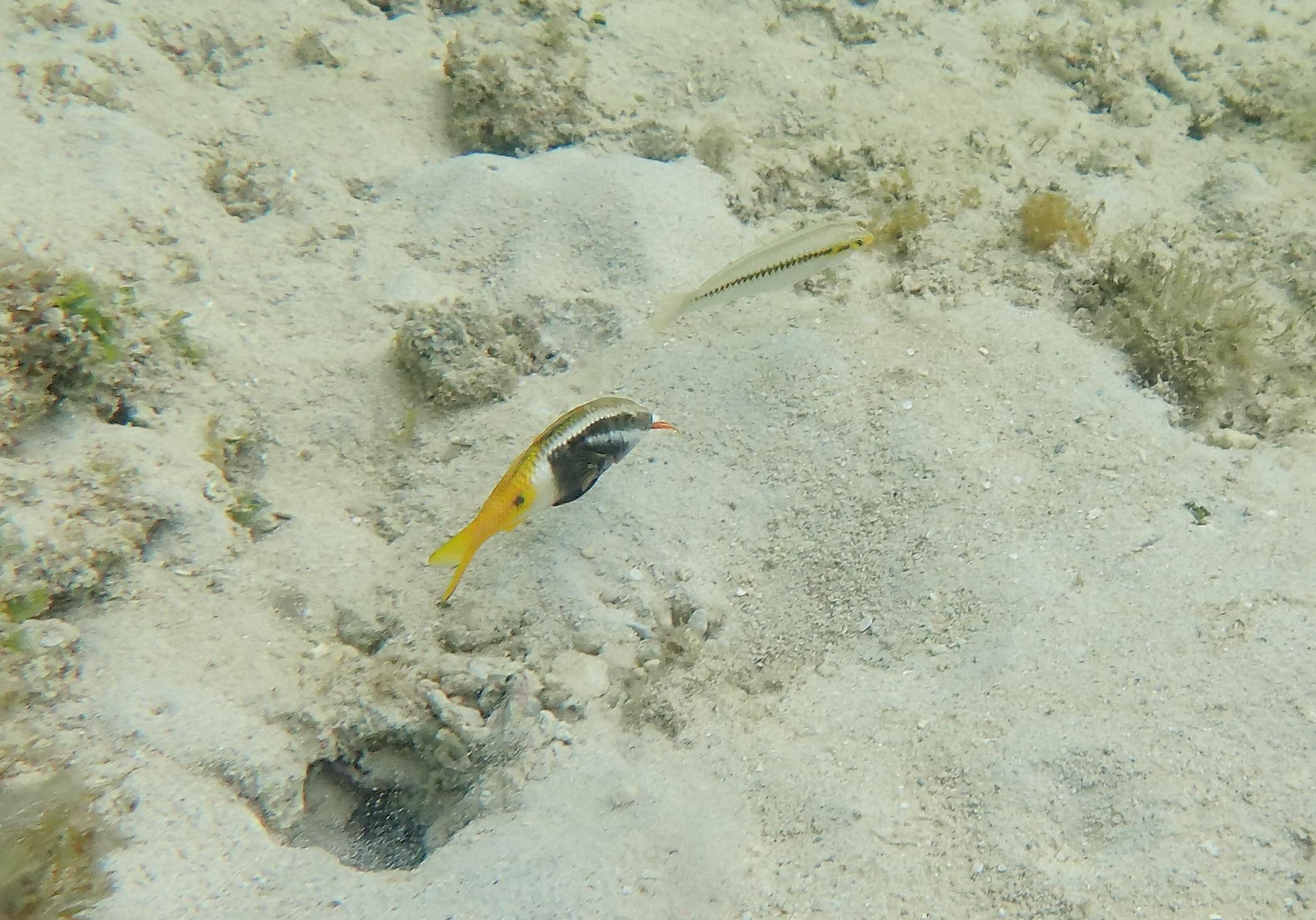
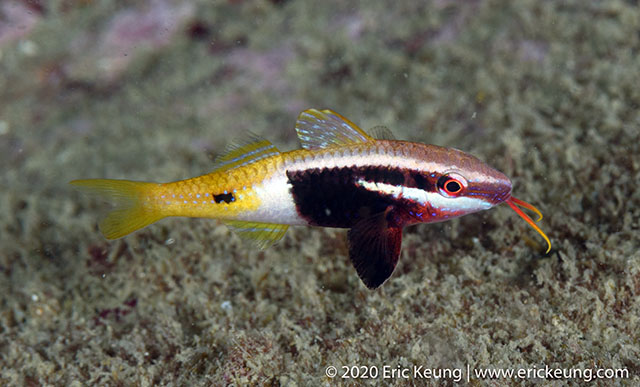
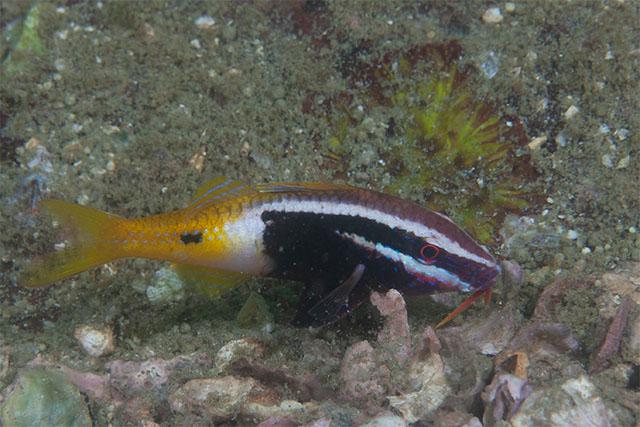
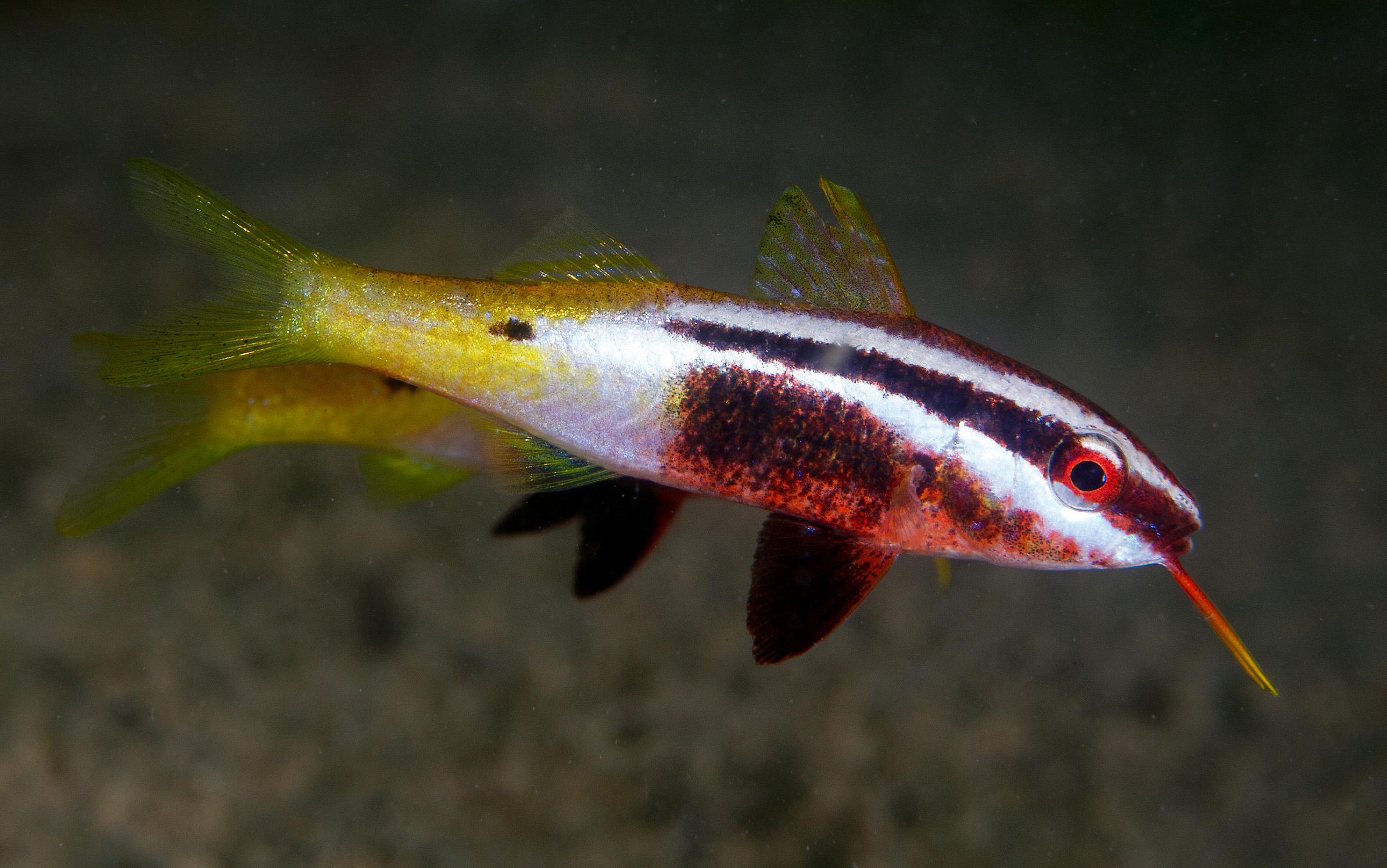
Dorsal spines (total): 8; Dorsal soft rays (total): 9; Anal spines: 1; Anal soft rays: 7. Diagnosis: Pectoral rays 15-16 (usually 15). Gill rakers 6-8 + 20-25 (total 28-32). Body moderately elongate, depth 3.2-3.5 in SL; head length 2.75-3.15 in SL; snout length 1.8-2.0 in HL; barbel length 1.3-1.5 in HL; head and anterior half of body reddish black, posterior half white and yellow with a black spot nearly as large as eye on upper side below rear base of second dorsal fin, followed by small blue spots; a white band from front of snout passing above eye along dorsal part of body, and a second nearly parallel one from corner of mouth to above pectoral fin; caudal fin pale yellow with a broad, dusky lower margin, and often with a small red spot at midbase; barbels red (Ref. 54393).
Common Names
Taxonomic Hierarchy
Kingdom: Animalia
Phylum: Chordata
Class: Teleostei
Order: Mulliformes
Family: Mullidae
Genus: Parupeneus
Species: Parupeneus barberinoides (Bleeker, 1852)
Climate Zone
Biology
Adults solitary, juveniles in schools (Ref. 90102). Usually found in the vicinity of coral reefs in protected waters such as bays or lagoons or in deeper outer-reef areas to at least 40 meters (Ref. 54393). Inhabits mixed sand, rubble, and seaweed covered bottoms near coral reefs. Carnivorous, feeds mainly on worms, crustaceans, brittle stars, and small mollusks and heart urchins.
Habitat
associated
Conservation Status
Least Concern
Threat to Humans
Harmless
Parupeneus barberinoides (Bleeker, 1852)