Parachelon grandisquamis (Valenciennes, 1836)

Description
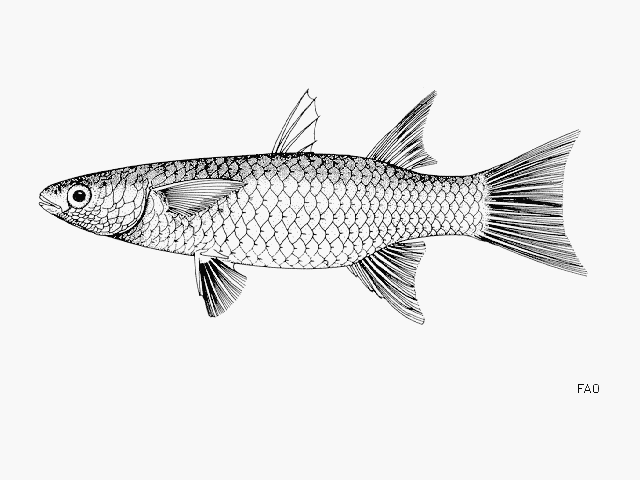
Anal soft rays: 8 - 9. Diagnosis: 8-9 anal soft rays; anal fin and lower lobe of caudal fin yellowish (Ref. 57400). Scales large, 25-30 (usually 27-29) in a longitudinal series (excluding scales on caudal fin base)(Ref. 57400, 81659), 8-10.5 scale rows between pelvic and first dorsal fins (Ref. 81659). Body with ctenoid scales, except for anterior predorsal scales which are cycloid and extend to anterior nostril or slightly beyond; scales usually with only 1 groove (some predorsal scales with 2 or rarely 3 small grooves); posterior end of maxilla sigmoid, curved down over premaxilla; serrate, anteroventral edge of lachrymal distinctly concave; pharyngobranchial organ with 2 valves, anteroventral valve usually a small, finger-like process, sometimes with fringe of smaller processes or papillae positioned ventrally at base, posterodorsal valve usually a small, squarish flap which is fimbriate, terminating in 2-3 short filaments (Ref. 81659).
Common Names
Taxonomic Hierarchy
Kingdom: Animalia
Phylum: Chordata
Class: Teleostei
Order: Mugiliformes
Family: Mugilidae
Genus: Parachelon
Species: Parachelon grandisquamis (Valenciennes, 1836)
Climate Zone
Biology
Very common in lagoons and estuaries; an extremely euryhaline species (from 0-66‰), but preferring areas close to the sea in estuaries and lagoons (Ref. 57400), often with muddy substrates (Ref. 81659). Inhabits shallow coastal waters, estuaries and brackish lagoons (Ref. 2683), including mangroves (Ref. 2683, 81659), creeks, estuaries, inundated mudflats (Ref. 81659) and freshwater rivers (Ref. 7399). Oviparous, eggs are pelagic and non-adhesive (Ref. 205). Maximum reported size 297 mm FL, but possibly up to 400 mm (Ref. 57400, 81659).
Habitat
freshwater
Conservation Status
Data deficient
Threat to Humans
Harmless
Parachelon grandisquamis (Valenciennes, 1836)