Mordacia mordax (Richardson, 1846)

Description
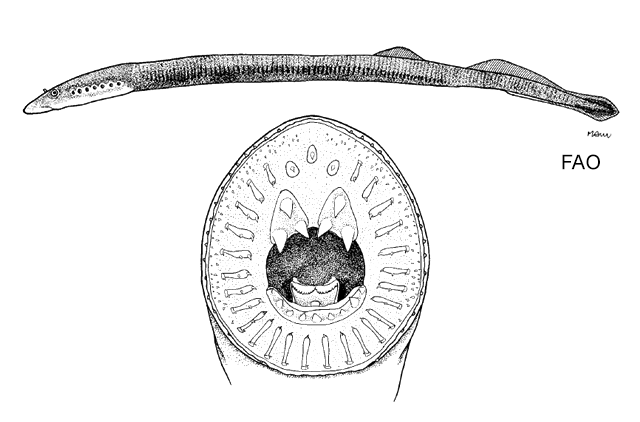
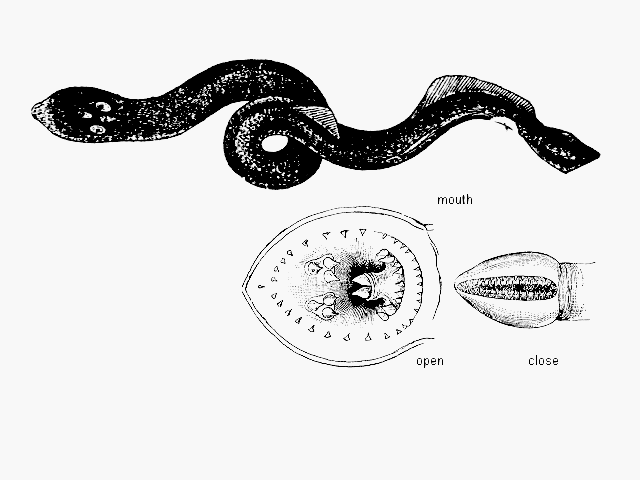
Adults: 11.3-43.2 cm TL; body proportions of pre-spawning specimens, as percentage of TL (based on 125 prespawning specimens measuring 11.3-42.1 cm TL): 8.5-11.3 prebranchial length, 7.1-9.8 branchial length, 60.4-68.3 trunk length, 14.4-20.1 tail length, 1.1-1.7 eye length and 4.9-6.6 disc length. Body proportions of spawning male specimens, as percentage of TL (based on 8 spawning males measuring 27.7-37.6 cm TL): 11.4-16.6 prebranchial length, 8.8-10.1 branchial length, 60.1-65.3 trunk length, 13.3-15.7 tail length, 8.1-11.2 disc length. Mature males with some loose skin in gular region. Urogenital papilla not prominent in mature adults; trunk myomeres, 84-96. Adult dentition: 2 triangular supraoral laminae each with 3 unicuspid teeth, 1 per apex; infraoral lamina, 7-9 unicuspid teeth of various size (these teeth become greatly enlarged with sexual maturation); 5-7 endolateral plates on either side each bearing 2-3 unicuspid teeth, usually 3; endolateral formula, typically 2-3-3-3-3-3 in immature individuals and 5-7 individual cusps on either side in mature individuals; 1 row of anterials; first row of anterials, 2 unicuspid teeth plus 1-2 bicuspid teeth or 3 unicuspid teeth flanked on either side by 1 bicuspid tooth; 1 row of exolaterals on each side; 1 row of posterials; first row of posterials, 12-14 posterial plates, the 2-4 lateralmost tricuspid and the internal ones bicuspid in immature individuals and 12-14 unicuspid teeth in mature individuals; transverse lingual lamina w-shaped, with 29 unicuspid teeth, the median one and the 2 subterminal ones slightly enlarged; longitudinal lingual laminae interrupted j-shaped, each with an undetermined number of unicuspid teeth. Velar tentacles in adults, 3-4, smooth. Body coloration (live) of immature adults brownish gray on dorsal surface and silvery on ventral surface; lateral line neuromasts darkly pigmented; caudal fin pigmentation, 25% to <75% coverage; caudal fin shape, spade-like; oral papillae, 25-45 (Ref. 89241).
Common Names
Taxonomic Hierarchy
Kingdom: Animalia
Phylum: Chordata
Class: Petromyzonti
Order: Petromyzontiformes
Family: Mordaciidae
Genus: Mordacia
Species: Mordacia mordax (Richardson, 1846)
Climate Zone
Biology
Adults inhabit the sea for an undetermined period and are parasitic on fishes; enter freshwater to breed. Majority of adulthood is spent in estuaries or at sea. Upstream spawning migrants occur in fast-flowing sections of rivers with a mud, sand or silt substrate, sometimes seen congregated below barriers to upstream movement such as weirs. Ammocoetes live in slow-flowing streams, burrowed in mud or silt. Common length is 35-40 cm (Ref. 44894). Larval life is 3.5 yrs. During the spawning migration, adults burrow in the substrate of rivers during the day and migrate upstream during the night. Fecundity, 3,789-13,372 eggs/female. De Castelnau (1872) states that the adults from the lower Yarra River, Victoria, are considered good food (Ref. 89241).
Habitat
freshwater
Conservation Status
Least Concern
Threat to Humans
Harmless
Mordacia mordax (Richardson, 1846)