Lethenteron reissneri (Dybowski, 1869)


Description
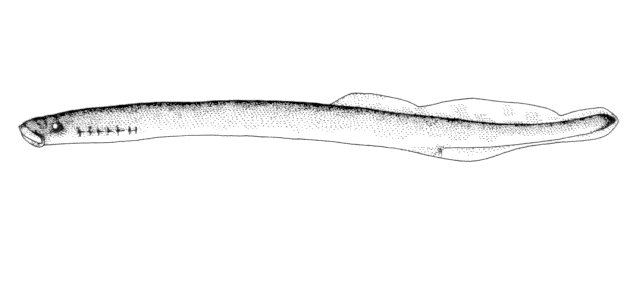
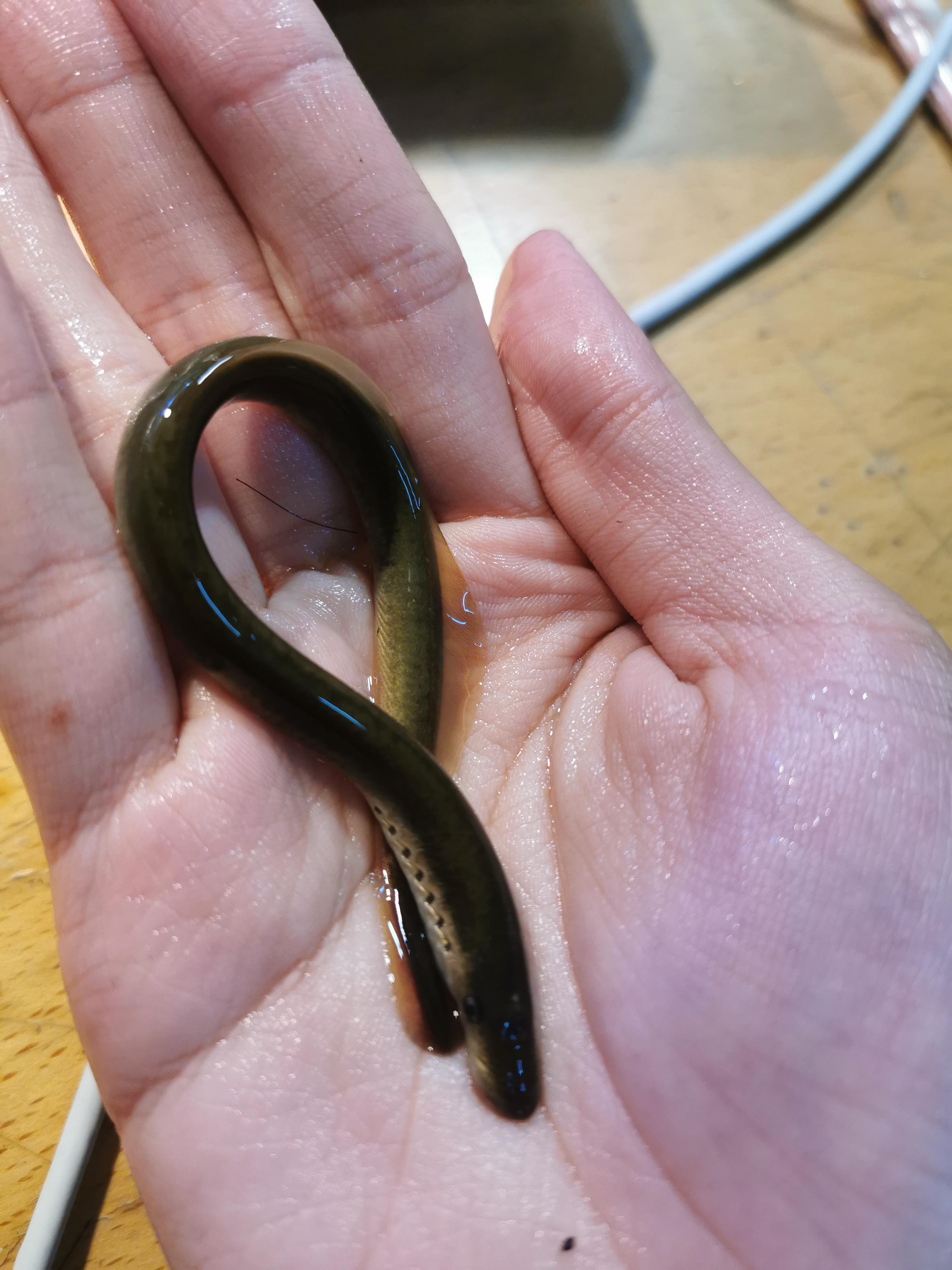
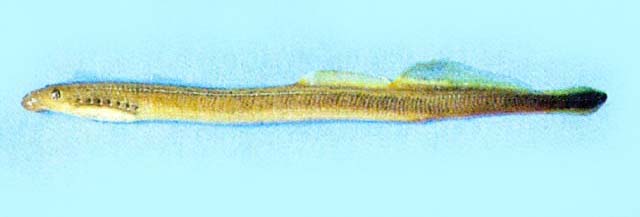
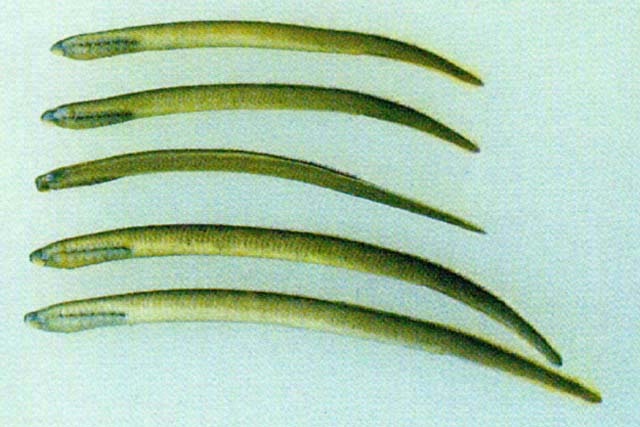
Body dark brown on back and white on belly; 7 external gill openings behind eyes; single nostril opening in front of both eyes; myotomes from last gill aperture to origin of anal fin 58-64 (Ref. 45563). Diagnostic features of adults: 11.1-20.2 cm TL. Body proportions, as percentage of TL (based on 19 specimens measuring 11.6-17.2 cm TL): prebranchial length, 10.3-12.3; branchial length, 9.5-13.3; trunk length, 46.0-54.2; tail length, 25.0-31.6; eye length, 1.2-2.4; disc length, 4.7-6.4. Urogenital papilla length, as a percentage of branchial length, in three spawning males measuring 14.3-15.4 cm TL, 16.4-67.8 (based on 21 spawning males 11.1-15.4 cm TL). Trunk myomeres, 57-65. Dentition: supraoral lamina, 2 unicuspid teeth; infraoral lamina, 6-11 unicuspid teeth; 3 endolaterals on each side; endolateral formula, typically 2-2-2; 1-2 rows of anterials; first row of anterials, 4-5 unicuspid teeth; total number of anterials, 38-44 unicuspid teeth; usually one exolateral present on one or both sides, exceptionally, one complete row of exolaterals on each side; single row of posterials consisting of 19-27 unicuspid teeth; transverse lingual lamina, 13 unicuspid teeth, the median one greatly enlarged; longitudinal lingual laminae each with 7-8 unicuspid teeth. Velar tentacles, 7, with tubercles, the median tentacle shorter than the lateral ones immediately next to it. Lateral line neuromasts unpigmented. Gular region unpigmented. Second dorsal fin unpigmented. Extent of caudal fin pigmentation, 1% to <25% (33%) or, 75% or more (67%). Caudal fin shape, spade-like (Ref. 89241).
Common Names
Taxonomic Hierarchy
Kingdom: Animalia
Phylum: Chordata
Class: Petromyzonti
Order: Petromyzontiformes
Family: Petromyzontidae
Genus: Lethenteron
Species: Lethenteron reissneri (Dybowski, 1869)
Climate Zone
Biology
Freshwater. Occurs in rivers, brooks, ponds, and lakes (Ref. 89241). Inhabits all types of rivers and streams, including brackish waters and enters floodplain meadows during high waters. Ammocoetes occur in detritus-rich sands or clay sediments (Ref. 59043). Parasitic; semelparous (Ref. 12218). Adults nonparasitic (Ref. 89241). Spawns in shallow water on sand-gravel bottom (Ref. 59043). Spawning period in Japan is from mid to late May. Fecundity, 495-2,942 eggs/female in Japan, with the long diameter of eggs varying from 0.98 to 1.37 mm and the short diameter from 0.86 to 1.25 mm (Ref. 89241).
Habitat
demersal
Conservation Status
Least Concern
Threat to Humans
Harmless
Lethenteron reissneri (Dybowski, 1869)