Lethenteron ninae Naseka, Tuniyev & Renaud, 2009
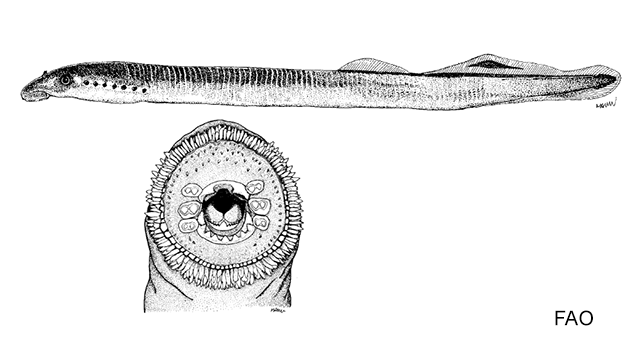

Description
Adults: 13.06-16.6 cm TL. Body proportions, as percentage of TL (based on 12 recently metamorphosed specimens measuring 13.06-16.6 cm TL): prebranchial length, 8.7-13.1; branchial length, 9.6-10.9; trunk length, 50.1-53.6; tail length, 25.7-29.2; eye length, 1.4-2.0; disc length, 3.8-5.2; prenostril length, 4.0-6.0; snout length, 4.8-6.9; postocular length, 2.7-3.6. Trunk myomeres, 58-62. Dentition: supraoral lamina, 2 unicuspid teeth; infraoral lamina, 5-7 mostly unicuspid teeth, but 1-2 may be bicuspid; 3 endolateral teeth on each side; endolateral formula, typically 2-2-2, but 2-3-2 (20% of cases) and 2-2-3 (15%) also occur; 1-2 rows of anterials; first row of anterials, 5-7 unicuspid teeth; exolaterals absent; first posterial row absent (27% of cases) or present in a single incomplete row consisting of 3-7 mostly unicuspid teeth, but 1-2 may be bicuspid; transverse lingual lamina, 9-15 unicuspid teeth, the median one greatly enlarged; longitudinal lingual laminae straight, each with 5-9 unicuspid teeth. Velar tentacles, 7; the median one shorter than the adjacent lateral ones and the tentacles have tubercles on their dorsal aspect. There are no velar wings. Body coloration (live and freshly preserved) is gray on the dorsal aspect and lighter on the ventral aspect and without mottling. Dark blotch near apex of second dorsal fin. Lateral line neuromasts darkly pigmented on the ventral surface and prebranchial region in some individuals but unpigmented in others. Extent of caudal fin pigmentation, 1% to <75%. Caudal fin shape, rounded or spade-like. Oral fimbriae, 69-99 (Ref. 89241). Also Ref. 82201..
Common Names
Taxonomic Hierarchy
Kingdom: Animalia
Phylum: Chordata
Class: Petromyzonti
Order: Petromyzontiformes
Family: Petromyzontidae
Genus: Lethenteron
Species: Lethenteron ninae Naseka, Tuniyev & Renaud, 2009
Climate Zone
Biology
Freshwater. Ammocoetes live in silt, sand or fine pebble substrate in the middle and lower sections of rivers where the current is absent or slow, at water depths of 10-50 cm, among submerged plants (Rumex acetosella, Polygonum sp., Juncus sp.). Adults are also found in the same general habitat as both life stages are commonly caught together. Metamorphosis is believed to occur prior to mid-September when fully metamorphosed individuals were first caught. Adults are nonparasitic. The spawning period is undetermined (Ref. 89241)..
Habitat
demersal
Conservation Status
Near Threatened
Threat to Humans
Harmless
Lethenteron ninae Naseka, Tuniyev & Renaud, 2009