Nealotus tripes Johnson, 1865

Description
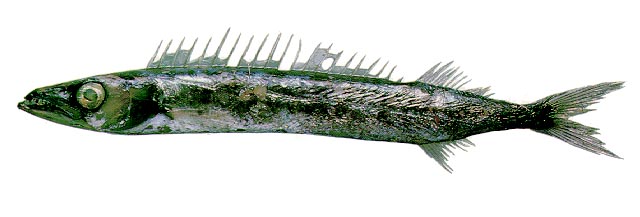
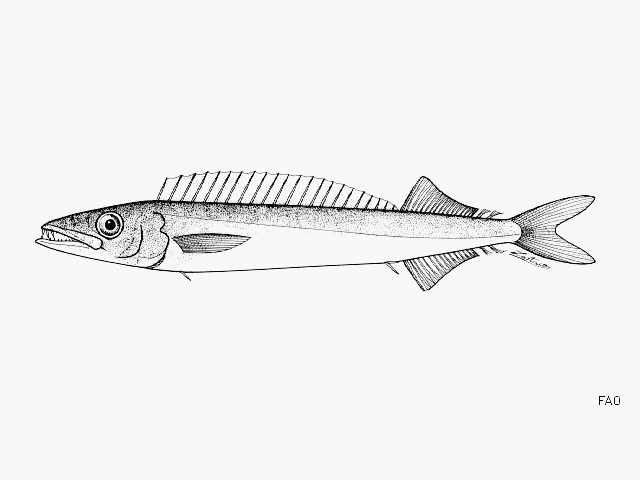
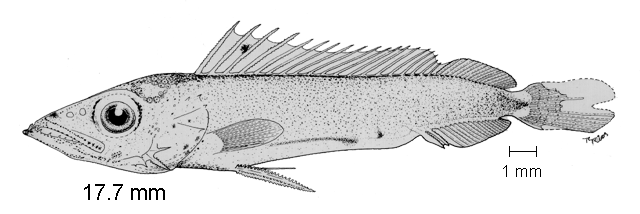
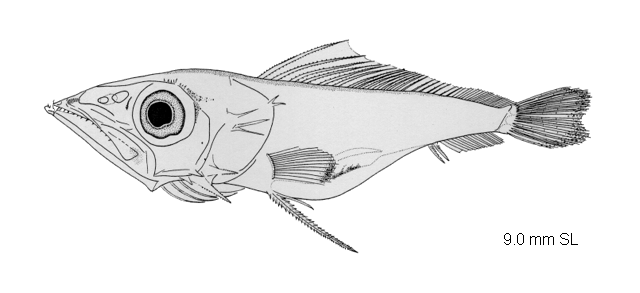
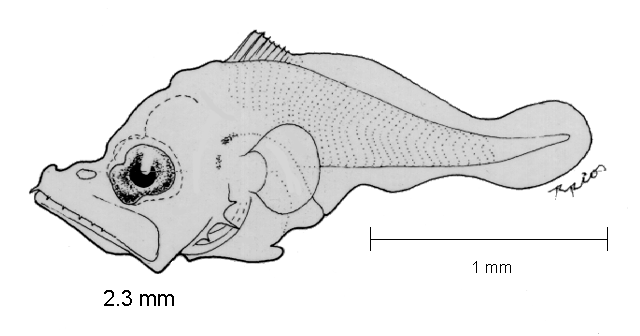
Dorsal spines (total): 20 - 21; Dorsal soft rays (total): 16 - 19; Anal spines: 1; Anal soft rays: 15 - 19; Vertebrae: 36 - 38. Body greatly elongated and compressed. Mouth large with fang-like teeth. Tips of both jaws with dermal processes. Color is blackish brown; dorsal and anal fins pale brown; buccal and branchial cavities and peritoneum black.
Common Names
Taxonomic Hierarchy
Kingdom: Animalia
Phylum: Chordata
Class: Teleostei
Order: Scombriformes
Family: Gempylidae
Genus: Nealotus
Species: Nealotus tripes Johnson, 1865
Climate Zone
Biology
Oceanic, epipelagic to mesopelagic (Ref. 47377), migrating to the surface at night (Ref. 6181). Feeds on myctophids and other small fishes, squid and crustaceans (Ref. 6181). Matures at 15 cm SL (Ref. 36731).
Habitat
bathypelagic
Conservation Status
Least Concern
Threat to Humans
Harmless
Nealotus tripes Johnson, 1865