Mastacembelus oatesii Boulenger, 1893

Description
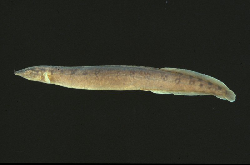
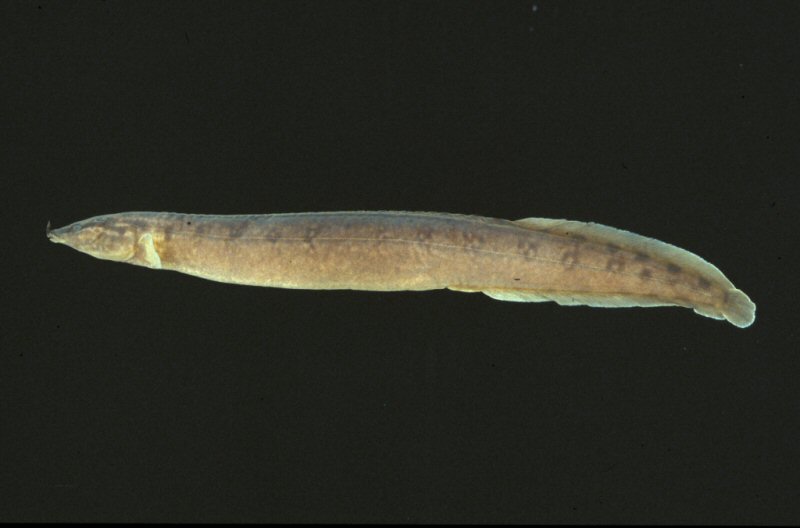
Dorsal spines (total): 34; Dorsal soft rays (total): 48 - 56; Anal soft rays: 46 - 60; Vertebrae: 79 - 80. Distinguished from all other Mastacembelus (sensu Travers) by substantially lower counts of dorsal and anal fin rays and vertebrae. The dorsal rays only 48-56 and anal fin rays only 46-60 (other Mastacembelus with dorsal and anal rays usually 70 or more). Vertebrae 79-80 (others species usually with 85 or more). The caudal fin rays count 21-22 is high (Mastacembelus alboguttatus, M. dayi and M. unicolor are the only other species with as many or more caudal fin rays. Snout very broad and short; jaws extending posteriorly fully two-thirds of distance to below anterior margin of eye; preorbital spine extending posteriorly to below margin of eye or somewhat beyond; preopercle without spines; body with a few large dark spots which may extend onto base of dorsal fin, fins otherwise plain (Ref. 39392).
Taxonomic Hierarchy
Kingdom: Animalia
Phylum: Chordata
Class: Teleostei
Order: Synbranchiformes
Family: Mastacembelidae
Genus: Mastacembelus
Species: Mastacembelus oatesii Boulenger, 1893
Climate Zone
Biology
Life cycle and mating behavior
Habitat
demersal
Conservation Status
Endangered
Threat to Humans
Harmless
Mastacembelus oatesii Boulenger, 1893