Ernogrammus zhirmunskii Markevich & Kharin, 2011

Description
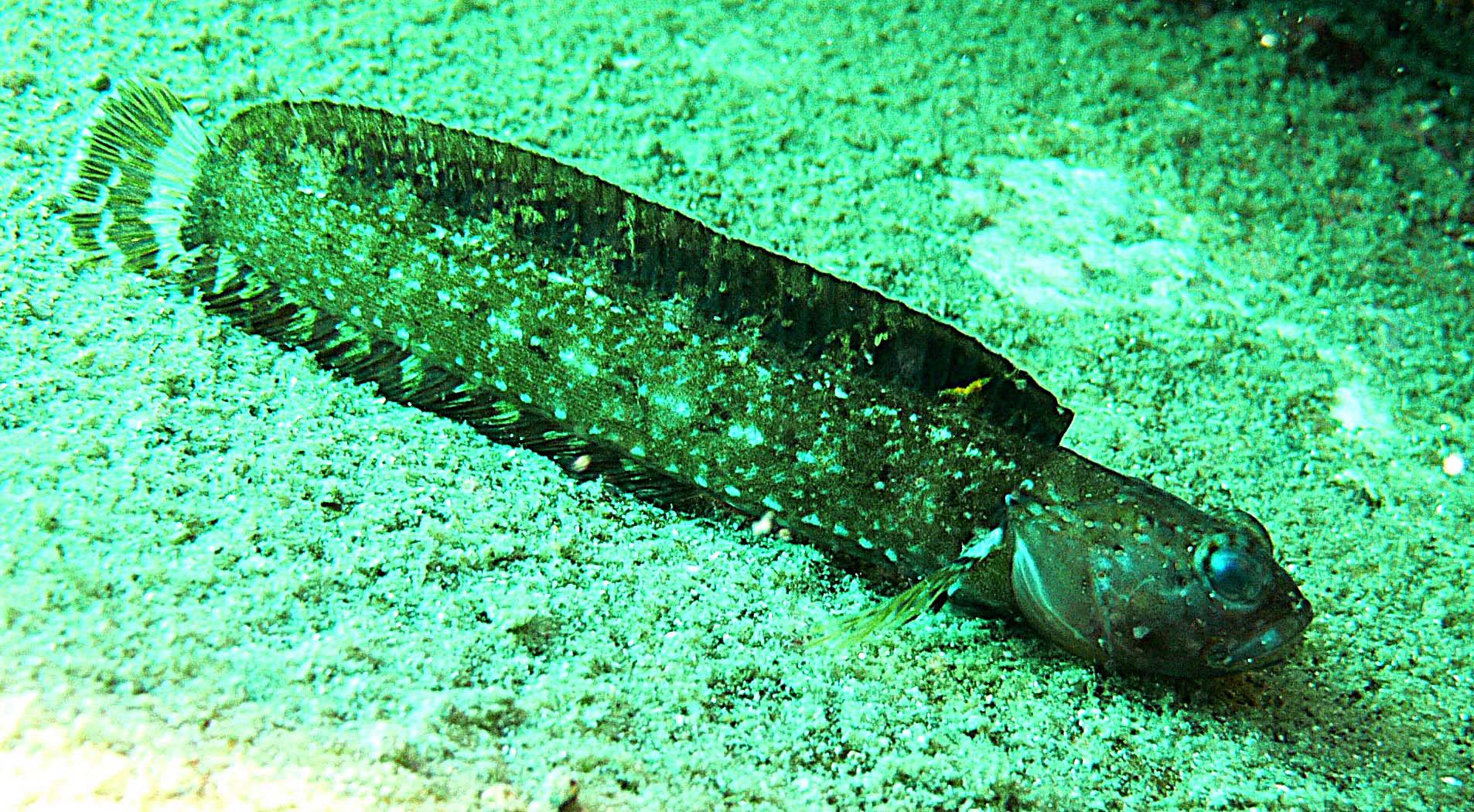
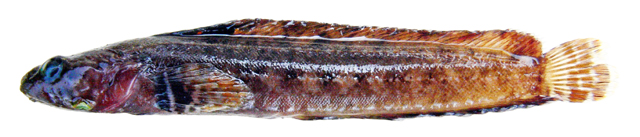
Dorsal spines (total): 41 - 42; Anal spines: 2; Anal soft rays: 28 - 30; Vertebrae: 44 - 47. This species is distinguished from its congeners in having 7 body sensory canals, including one short canal in the middle of belly; anal fin rays with one short rigid spine posteriormost (I 28-30 I); with one narrow white stripe between two wide black ones on the base of pelvic fin, and one dark blotch on the dorsal fin anteriorly (Ref. 86739).
Taxonomic Hierarchy
Kingdom: Animalia
Phylum: Chordata
Class: Teleostei
Order: Perciformes/Zoarcoidei
Family: Stichaeidae
Genus: Ernogrammus
Species: Ernogrammus zhirmunskii Markevich & Kharin, 2011
Climate Zone
Biology
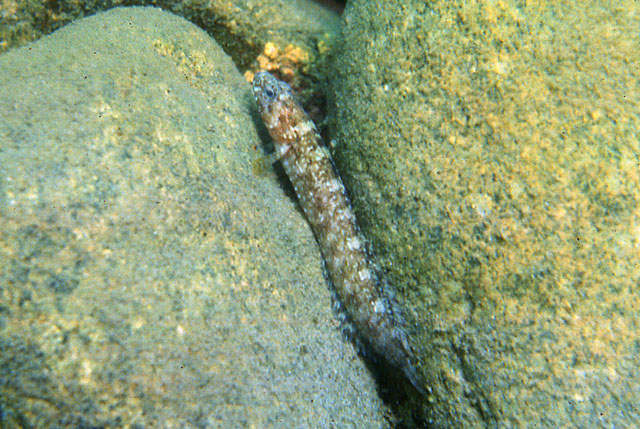
This species, from visual underwater observations, occurs in rocky substrate, 2.5-11.3 m, at water temperature from 14ºC to 21ºC during July to September. It is a secretive species, and under ordinary condition it seldom leave their shelters under boulders in the daytime and usually with only the anterior part of the body exposed. During the collection, 1-3 fish were usually found under one boulder 0.3 × 0.3 m in size, the common density reached 8 fish/m2. The species is inactive at night, unlike E. hexagrammus which commonly occurs in the same rocky habitat. Specimens of the type series had average body weight 1.425 g (1.100-1.900 g), the smallest collected fish (FEMBSNR 748 juvenile SL 34 mm) had body weight of 0.350 g. Stomachs of collected specimens contained remains of shells of small mollusk Falsicingula mundana (Gastropoda: Discopoda: Falsicingulidae), remains of unidentified fish and lumps of tiny fish eggs (Ref. 86739).
Habitat
demersal
Conservation Status
Not Evaluated
Threat to Humans
Harmless
Ernogrammus zhirmunskii Markevich & Kharin, 2011