Chelon dumerili (Steindachner, 1870)
Description
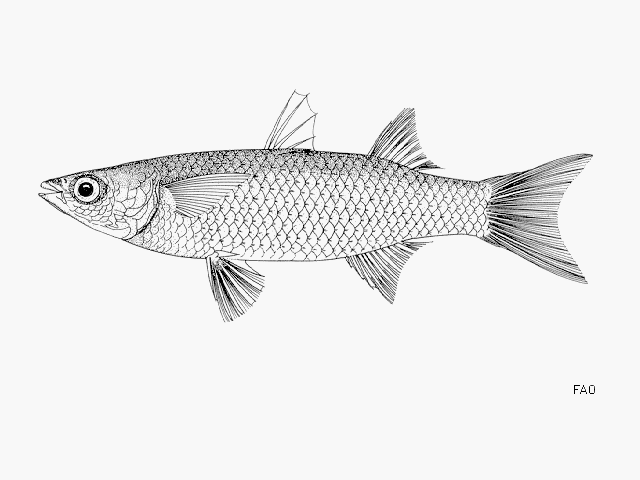
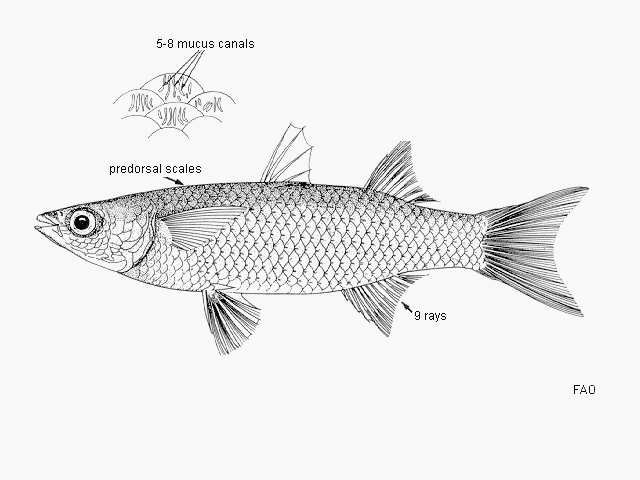
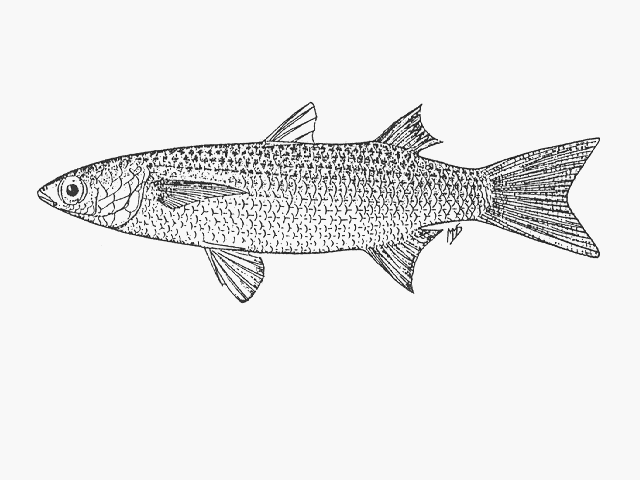
Dorsal spines (total): 5; Dorsal soft rays (total): 8 - 9; Anal spines: 3; Anal soft rays: 8 - 9. Diagnosis: 8-9 anal soft rays; anal fin and lower lobe of caudal fin whitish or greyish (Ref. 57400). Body with ctenoid scales except for anterior predorsal scales which are cycloid and extend to anterior nostril or slightly beyond (Ref. 81659). Scales numerous (Ref. 57400), not large, 33-41 in a longitudinal series (excluding scales on caudal fin base), 11-14 scale rows between pelvic and first dorsal fin (Ref. 81659). 5-8 mucous canals on scales in front of 1st dorsal fin (only 1, less often 2 or 3, in other Liza species (Ref. 57400). Posterior end of maxilla sigmoid, curved down over premaxilla; serrate, anteroventral edge of lachrymal distinctly concave; pharyngobranchial organ with 1-2 valves, anteroventral valve a moderate size, semi-lunate flap, posterior valve usually vestigial, as a small nodule or, at most, a low papillate fold, and may be absent (Ref. 81659).
Common Names
Taxonomic Hierarchy
Kingdom: Animalia
Phylum: Chordata
Class: Teleostei
Order: Mugiliformes
Family: Mugilidae
Genus: Chelon
Species: Chelon dumerili (Steindachner, 1870)
Climate Zone
Biology
Inhabit shallow coastal waters (Ref. 27121), including estuaries (Ref. 2683, 57400, 81659), lagoons (Ref. 57400), tidal rivers (Ref. 3573), freshwater and supersaline environments (Ref. 81659). Feed on plankton and detritus (Ref. 28587). Oviparous, eggs are pelagic and non-adhesive (Ref. 205). Shows a remarkable adaptation to hyperhaline environments (up to 97‰ in the Sine Saloum in Senegal)(Ref. 57400). Specimens from tropical East Atlantic reaching maximum of 280 mm SL and common to 180 mm SL (Ref. 81659).
Habitat
freshwater
Conservation Status
Data deficient
Threat to Humans
Harmless
Chelon dumerili (Steindachner, 1870)