Hyporhamphus unifasciatus (Ranzani, 1841)

Description
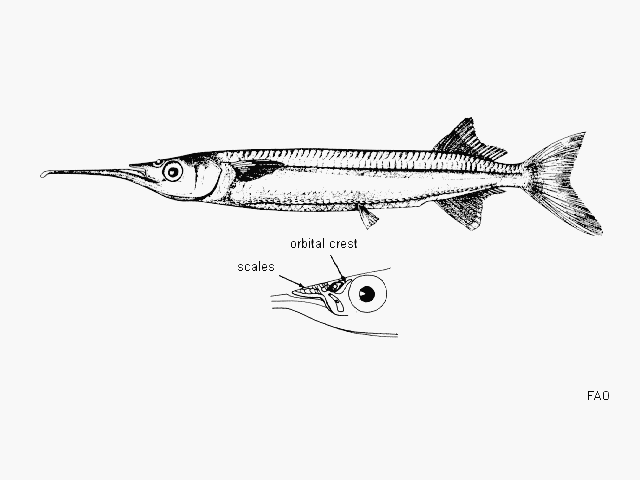
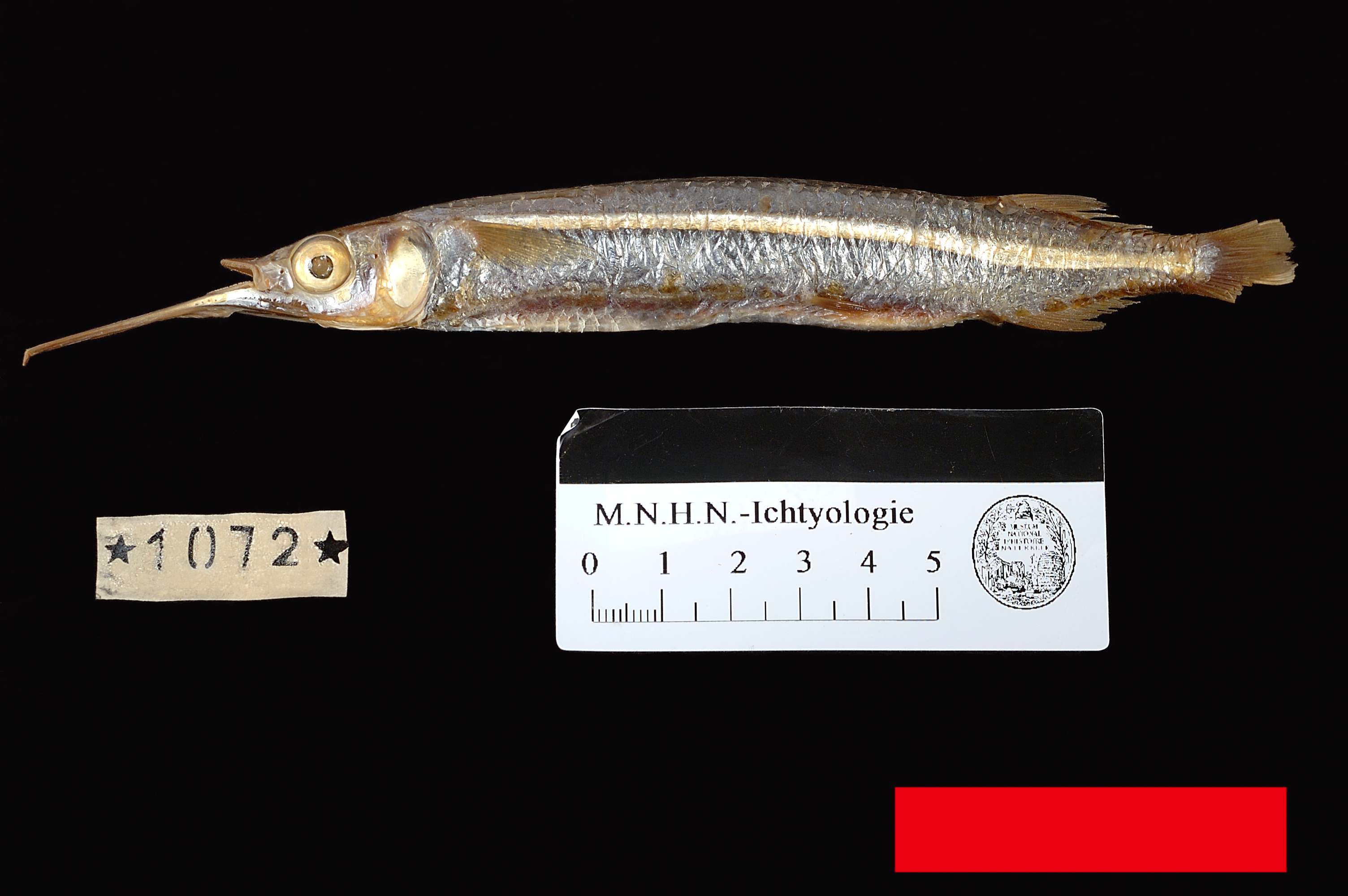
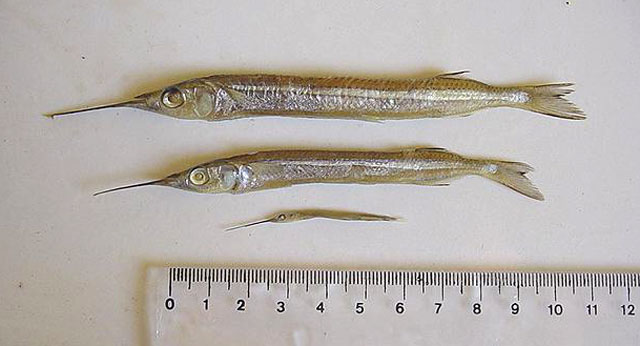
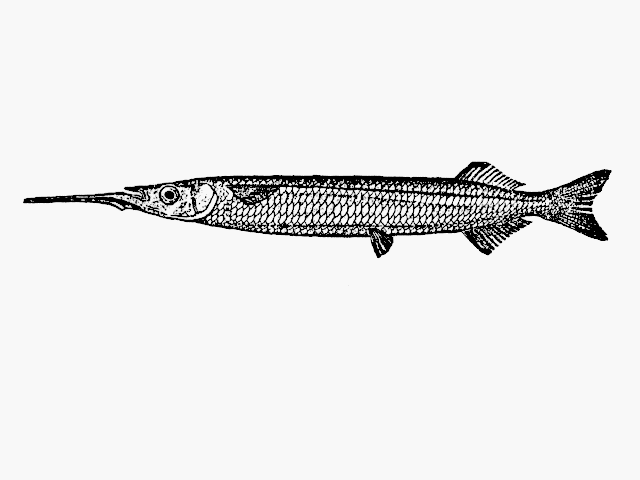
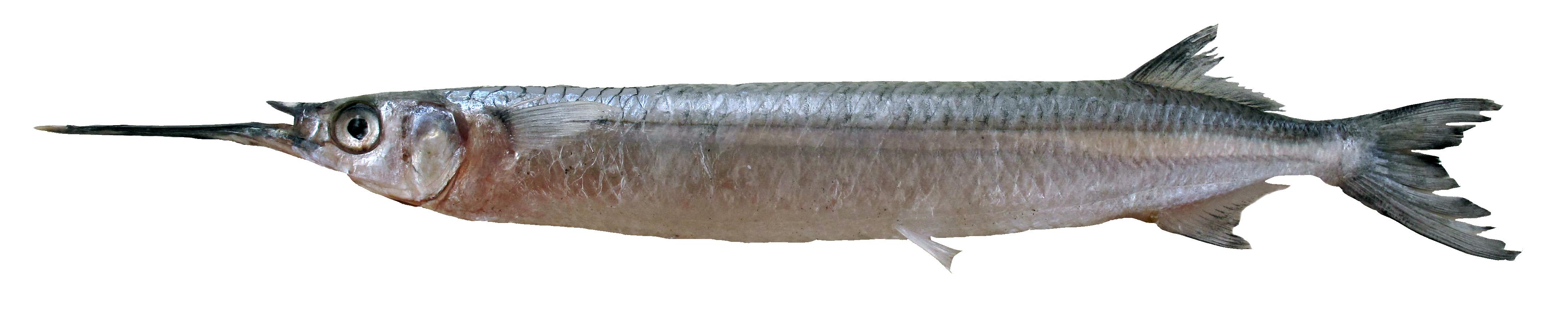
Body elongate; lower jaw very prolonged; upper jaw short, triangular, and scaly; lower branch of first gill arch with 29 to 38 gill rakers; fins lacking spines; pectoral fins not very long; caudal fin emarginate or slightly forked; anal fin with 15 to 18 rays; back greenish, with 3 narrow, dark, bars; flanks and belly silvery white; fleshy border of lower jaw red; caudal fin light colored with dark tips (Ref. 55763).
Common Names
Taxonomic Hierarchy
Kingdom: Animalia
Phylum: Chordata
Class: Teleostei
Order: Beloniformes
Family: Hemiramphidae
Genus: Hyporhamphus
Species: Hyporhamphus unifasciatus (Ranzani, 1841)
Climate Zone
Biology
An inshore, surface-dwelling species forming sizeable schools, frequently entering estuaries (Ref. 3723). Uncommon over reefs (Ref. 9710). Omnivorous, feeds on algae and other small animals (Ref. 3723). Caught with 'mandinga' nets in Venezuela, often using lights (Ref. 3723). Edible but not really appreciated (Ref. 3723).
Habitat
brackish
Conservation Status
Least Concern
Threat to Humans
Reports of ciguatera poisoning
Hyporhamphus unifasciatus (Ranzani, 1841)